15 Years of Vibrant Forest with Ryan Dack


This week on The Beer Rep Chats With, I'm joined by Ryan Dack, General Manager of Vibrant Forest Brewery.
We dive into the brewery's 15-year journey from a garage brewing project to one of the UK's most respected independent breweries. Ryan shares the story behind their iconic Pupa Pale Ale, how the brewery has adapted through changing beer trends, the importance of collaboration in the independent beer scene, and why community remains at the heart of everything they do.
We also chat about taprooms, beer styles making a comeback, lessons learned from opening and closing a high street venue, and what the future holds for Vibrant Forest as they celebrate their milestone anniversary.
Follow Vibrant Forest
Insta: https://www.instagram.com/vibrantforest/
Website: https://vibrantforest.co.uk/
Powered by The Keg Warehouse
Martin (00:00)
Hello and welcome to another episode of the Beer Rep Chats with and today I am delighted to be joined by Ryan Dack from Vibrant Forest. Ryan, thank you for joining the show.
Ryan Dack (00:12)
man, thank you so much for having me. I'm buzzing. I'm really excited to talk to you.
Martin (00:14)
⁓
Yeah, I'm really excited as well. I'm a big fan of Vibrant Forest. Love the beers that you brew and yeah, it'd be good to dive in depth about the story of Vibrant Forest. ⁓
Ryan Dack (00:26)
Yeah, yeah, love to.
We'll go anywhere. Like I said, we'll go anywhere you want to go, mate. Whatever you think people want to hear or what you're interested in. I'm more than happy to chat through whatever, really.
Martin (00:35)
Awesome. So ⁓ we start with, you know, how Vibrant Forest first started and the reason behind it.
Ryan Dack (00:42)
Yeah, absolutely. well, so first of all, this year is our 15th anniversary. So we've hit 15 years now, which is pretty mental. So our founder and director, Kev Robinson, back in 2009 started messing around in his garage, like, you know, most, well, lot of breweries do. Started making wine, actually, like country wine, and then sort of turned it over to doing a bit of beer brewing.
Martin (00:50)
Yeah, it's a long time.
Ryan Dack (01:10)
based on sort of American Pales that he's had and the big hoppy stuff and just stuff that he wanted to drink really. But a complete hobbyist, like even in weekends, cold garage, a kit made out of buckets, like proper homebrew stuff. I mean in 2011, he kind of registered the name Vibrant Forest, which kind of just came around from a drunken chat really in a pub somewhere.
Martin (01:34)
That's most of it. Yeah.
Ryan Dack (01:35)
as most and the best ideas come from that and you
know the vibrancy being based on that sort of beers that he was making sort of big American styles hoppy stuff and forest obviously where it started and we still are in the new forest in the south of England so that's kind of linked together and then since then we've kind of kept to that and kept making you know hoppy hazies you know all vibrant beer basically but yeah so 2011 again he bought a little kit like a little 100 litre kit and was
able to rack about four casks at a time. And again, was just making stuff that he wanted to drink rather than having to worry about who's going to buy it, where do I sell it. And it would just go to CAMRA beer festivals and bits and pieces like that. Sort of the back end of 2011, he won his first ever CAMRA festival award for Wheat Wave actually, which was like a Hefeweizen beer in cask. So yeah, so that kind of gave him the kind of confidence that he must have some idea of what he's up to and what he's doing.
Martin (02:13)
Yeah.
Cool.
Ryan Dack (02:35)
And then 2014 is when it all really started properly in terms of we Kev put his life savings into an industrial unit in the forest and bought a brew kit. And then it's sort of been natural, sort of organic, slow growth since then really to where we are now still in a new forest on the edge in an area called Hythe So it's just on the Southampton side of the new forest. Four industrial units, a team of sort of eight, nine people.
Still surviving mate, ⁓ that's the game these days, still surviving. But the most important thing I think for us is like we're still having a lot of fun and we're still making beers that we want to drink and ⁓ there is definitely worse jobs in the world.
Martin (03:05)
It is, yeah.
Definitely, yeah. 100
% agree there, yeah. I mean, it is tough for a lot of breweries these days. you know, just reaching 15 years is a massive achievement as well. I mean...
Ryan Dack (03:24)
Yeah, it's crazy.
We've got some plans this year and stuff to celebrate that and going back and understanding a bit more. Because obviously I've been here since COVID, so about five years now. And going back and chatting to Kev and going through some old photos and posters and beer festival flyers and stuff like is incredible. yeah, it's just been fantastic to take a bit of time and look back and stuff.
Martin (03:46)
Yeah, definitely. So do you want to explain what your role is in Vibrant Forest and what made you decide to join them?
Ryan Dack (03:51)
Yeah, yeah, yeah, cool.
I spent like 10, 11 years running pubs and nightclubs and stuff. then COVID happened. When I went back to work, it was sit down, book a meal, four people, all that nonsense that we were doing, which was really tough for hospitality. So I basically scrapped it. I'd spent a year at home with the kids. I had a young family. So I basically just
down to the hospitality stuff and I found a building site to go and work on for a few months. And then I live in the area where the brewery is. So then a job role came up for a taproom manager. So I was like, let me go and have a look at what's all that about. And I basically joined as a taproom manager and absolutely became obsessed with it and fell in love with it. Like day one, obsessed, like tell me everything. Why does that do that? How does that work? What are you doing? Why, how, when? So I did that for like a year, 18 months, maybe two years. And then,
Kev decided that he wanted to take a little bit of a step back from the day-to-day stuff. And he kind of got me to do basically general manager role. So how it works now, I guess, is I make sure that we can get paid at the end of the month, keep the lights on, all the boring admin stuff, the day-to-day running and direction and stuff. And then Kev is still very much director of behind the scenes involved. There's a lot of web stuff now, general direction of where we're going. So yeah, it's been like a mad five years and I'm still absolutely obsessed with it all.
But it's just great fun, man. like, when you're doing something creative and small and community based, like, there's just nothing better, man. There's absolutely nothing better. yeah, so I think sometimes my job looks sexy from the outside. I spend a lot of time paying bills, chasing bills, ordering things, trying to get the brewers to make beers that will sell easier, you know? And just, yeah, generally just, I wouldn't say I'm a master of anything, but like, generally bringing everyone together. Everyone who's got their own...
Martin (05:41)
Yeah.
Ryan Dack (05:49)
expertise and I'm just a kind of glue maybe the middleman or whatever you want to call it.
Martin (05:53)
The glue that fuses it all together and keeps it running. Yeah, definitely. So obviously you said you talked about, you've, grown quite, quite big since 2011. ⁓ What key points helped you to get to where you are now really?
Ryan Dack (05:56)
Just try to keep us in business for another month. ⁓
Yeah.
So I think in the early days we were, in terms of the New Forest area where we are, we were the only ones kind of making this type of beer. this, in, know, we're talking when it was booming, you know, like the IPAs, the Hazy Pales, all that big stuff. Yeah, there was no one around us making it. And I suppose what actually happened, like sort of 2015 to 18 would be like, we were selling a lot of beer further away. So we were going like two hours to Brighton, two hours to London, Bristol.
Martin (06:22)
Yeah, I Pupa was quite, Pupa was big when it first came out.
Ryan Dack (06:39)
and actually not doing a lot in the New Forest because it was quite traditional, know, clear brown beer, please. And I don't want none of that hazy stuff. So that really got us a load of momentum pre-COVID, guess, and like to the point where like when we moved and rebranded in like 2018, that had been off the base of making beers that no one else was making in the area. And, you know, and I think in the early days and everything's rosy and golden and the craft beer stuff was booming and
Martin (06:46)
Yeah.
Ryan Dack (07:07)
You could fill the recipes with as many hops as you could possibly get in the kit and no one was worried about anything. It's all happy days. then, know, COVID is COVID. And then I think off the back of COVID, we've managed to sort of maintain and survive just by having taken risks and not sitting still, not being comfortable with, well, this is what we've done before. So this will work. But actively going out and trying to find other ways of doing stuff, getting information from people that know way more than us.
And just constantly moving, mate. That's the fun bit for me now is what's next, what can we do next, how can we do stuff better, what info are we missing, whether it's recipe-based, kit-based, tap room-based. And I think that's kind of allowed us now to get through some rough patches and sort of hopefully kick on now. But yeah, definitely in the early days, it was kind of standing out in our area where we are in terms of our beers for sure.
Martin (07:59)
Yeah.
Are you starting to see sales pre-COVID pick up a bit?
Ryan Dack (08:05)
⁓ Yes and no, it's very different. So our tap room is flying, our tap room is amazing. It's kind of year on year now it's been really good. But in terms of sale, like pre ⁓ COVID, export was 40 % of our trade sales. So we were flying around beer all over the gaff. Then that took a massive crash after, like speaking to a of importers, know, ⁓ craft beer drinkers in other countries just found local breweries because they couldn't get their beer.
from elsewhere. and then now what I'm starting to notice is that kind of hoppy, hazy, double IPA, 6 % IPA, that boom's kind of not finished, but it's definitely gone a little bit. There's a lot of, even like the last 18 months, know, craft beer bars and pubs and like everyone's going back to those classic styles, easy drinking lagers and bitters and traditional stuff.
Martin (08:47)
Yeah, I reckon so.
Ryan Dack (08:59)
a lot of micro pubs and places they're looking for like a more affordable approachable beers that gets more people in. Loads of sessions, we've noticed like traditional stuff's coming back, people want to buy bitters again. Obviously, Lager, all know is like coming back with a vengeance now. So like the sales are there, it's just maybe different beers that we're selling more of rather than the kind of the portfolio that we would have done like pre COVID, you know.
Martin (09:06)
Session ones as well, they fly out. Session beers fly out.
Yeah.
Yeah, yeah, it's definitely good to see more styles getting out there now again, you know, there is.
Ryan Dack (09:30)
I love it man.
mean you said like you work at Mash Paddle and stuff or you do your brewing stuff at Mash Paddle like you must see like I don't know many brewers that drink six percent IPAs you know they're all drinking stout or you know I've been at beer festivals where we go to the pub after and there's 18 brewers there and everyone's drinking like a stout or a lager or whatever and that's great and I think ⁓ there was almost like a bit of a I don't know maybe like six seven years ago I'll know I'm drinking IPA I'm drinking IPA whereas now everyone's free and
Martin (09:40)
We can't.
Ryan Dack (09:58)
comfortable just like, I'm going to have a lager, like I'm going to have a Saison, I'm going to have one of this, I'm going to have that. And it's just, we just, think it's our responsibility as a brewery to like make all of those as well. We can't rely on our best-selling beer being in a pale ale and be like, well, that will Pale the bills. Cause it just won't, you know, different bars, different pubs want different stuff.
Martin (10:09)
Yeah, definitely.
Yeah.
Yeah, definitely. You're starting to, I'm starting to see a lot, you know, breweries that are just being regarded as, you know, the best for making hazy beers. And that's all they've done is starting to make new different, new styles, starting to do collaborations with new breweries, getting doing different styles. And it's great to see, you know, because you can't rely on one style as a brewery and think.
Ryan Dack (10:29)
Yeah, absolutely.
No, like we,
I think we've obviously made stuff before, like we had Pilsner's before. I think only last year we only started making like a full blown lager. I'm mostly driven by the tap room to be totally honest. But now I think you have to try and make everything. You have to have a go. As long you're proud of it, like it might not be the thing you drink. If you can make a good quality, honest representation of that style, I think you have to be kind of spread. breweries get to a certain size.
where kind of selling out of your IPA every month is not going to cut it, you know, and you've got too many people you need to Pale and stuff and employees need to Pale. So you just have that wide style that you can pretty much, you can hit like a small managed house group as well as like a micro bar on a high street. You know, you just got to be able to sell to both.
Martin (11:28)
Yeah. Do you get much, many recommendations from like customers ⁓ of brewing a certain style of beer
Ryan Dack (11:34)
We get a lot of when you bringing that back when you bringing that back like so bear in mind like a lot of A lot of customers that will give us that will be the ones that want the strongest stuff the more obscure stuff The Kaleidoscopes of the world like six and a half IPAs Whereas you know
we always, and probably most breweries, always have kind of like a range of four to 5 % pales and stuff. So we don't get necessarily recommendations because obviously what drives our production schedule is driven by so many different things, whether it's sort of time of the year and what's coming up or ingredients, what's accessible to us. But we get a lot of people requesting sort of old favourites or old big IPAs and all that sort of stuff where we try and scratch that itch whenever we can, you know.
Martin (12:20)
Yeah, definitely. Yeah. So you obviously you opened up the vibrant tap in 2024. What did that move add to the business and the brand? It looks amazing.
Ryan Dack (12:25)
Mmm. Yeah.
Well, so
it's important to say that we open it in 24 and closed it in 25. So, but no, I'm, I'm, I'm happy to talk about it's a really good lesson for us actually. So, so we have a tap room on site. We opened a small sort of old restaurant in a high street in the new forest in Lyndhurst it's called. So ⁓ first, like the main reason was it was a tourist town, ⁓ bring like the name to more people.
get out there footfall, all that good stuff that you would open like a pub, a bar for whatever. I think in our naivety and our sort of haste, think what we've realised is our taproom is flying because it's got so many strings to its boat. It can do so many things. Like it's got big space. We're not taking customers from any other pubs. We're taking people that necessarily wouldn't go to a pub. We've got like loads of different classes here and groups that meet. And I think in Lyndhurst, we were sort of...
we didn't have the space and we didn't have the flexibility of the venue to be able to turn it from one thing to another thing. So like whenever we did events there and stuff really, really busy.
It was just a day to day grind, like that Monday to Friday sort of grind that people aren't in the high streets in pubs and stuff for us. It's not a big high street either. So basically we got to a year, we did a year's birthday party, we closed the street behind us and did this massive street party, it was unbelievable. And then we had to decide really, like at that point in time our tap room at the brewery didn't have a manager or a management team, he'd gone away to do something else.
And they and we just about wiped our face in Lyndhurst like we were fairly happy with a year like it wasn't what we wanted But it was still okay positive But then we made a decision like we go on another year How much do we think we can build that now knowing what the high streets actually like? Versus if we were to come back Bring the management team back to the taproom at the brewery bring all the stuff that we bought back as you know the furniture and all that stuff How would that it how would that sort of? improve the taproom at the brewery and the answer is like
a lot It would improve it a lot and it has improved it a lot and the team are great and all the furniture and fixings are great and we managed to get out of there without anyone losing out. All the local suppliers we were dealing with got paid and everyone got paid and it was kind of a clean exit. A little lesson for us to be like the taproom thing works because it's a taproom. It doesn't necessarily translate really well to high street venues. that's was great. It was a great lesson. But now
Martin (14:48)
Yeah.
Ryan Dack (14:53)
The tap room's grown sort of exponentially since that's closed down and hopefully in the future we'll be looking at something else but maybe more tap room based or micro brewery based again rather than like a brew kitchen or brew house or whatever you want to call it, know, rather than like a high street venture maybe we would do. But yeah, it was great, man. It was great. It was worth taking a risk for. We learned loads of lessons. Didn't lose out too bad and we gained a load of good staff for it.
Martin (15:20)
Yeah, yeah, definitely. I mean, obviously, you learn from what works and what doesn't work and of the back of that you've improved the taproom in the brewery and grown that better to what it was before. So and kept staff.
Ryan Dack (15:32)
I don't get me wrong, was stressful at
the time and it has pressures on the business but I'm happy that we took the shot and we had a go and we learnt a load of lessons from it and we've improved because of that. It still holds a good place in my memory.
Martin (15:45)
Yeah, definitely. Yeah. We're gonna focus a bit on your beers and your flavours and stuff. And you're quite big on promoting yourself as a vegan friendly. I mean, you've been kind of pushing that from as long as I can remember, about your beers being vegan friendly. So how do you keep that message going across when, know, most beers are these days are vegan friendly.
Ryan Dack (15:55)
Thanks.
Yeah, I mean, I don't, I wouldn't say like it's our mantra or it's up on the wall anywhere, you know, it's, I prefer to look at it like honest beers, like it is just what it is. It's natural beer, nothing's added to it, nothing's done to it. The kind of flavours of the hops or the yeast or whatever it might be are the natural flavours of the bits that do all the heavy lifting. And we don't tend to, well, we don't add anything and we don't fine it out or anything like that. And don't get me wrong, back in the early days, I reckon probably like 2015.
there was a bit of time where ⁓ we just bought on our first unit and our first brew kit and ⁓ there was no sales in the New Forest because it was all hazy. So I think if I look back, there's a four, five, six month period where we tried finings in our beer and we released a few posters and leaflets around the New Forest trying to educate people that it's hazy, doesn't mean it's the end of the barrel. Yeah.
Martin (17:02)
Yeah, there was that big transition, wasn't it, from people
going like, whenever you go to a bar and get a cask beer, for instance, and it was a bit cloudy or whatever, people were like ol' that's got off. Take that back. Yeah.
Ryan Dack (17:11)
Yeah, change that, change that, yeah. So we
tried it and then essentially it came down to two main things for us. One, you're adding a process and an ingredient like that's cost and you know, labour. But realistically, the most important thing for us is we're spending all this money on hops and yeast, like these American hops, New Zealand hops. And then we're kind of stripping out all the bits of it, you know, the sediment, all the flavour, all the good stuff that's in that beer, we're kind of just stripping out with another process. So we've been very conscious of that and we just want to make like good, honest beer.
keep it, you know, we've always been with every beer we've ever made since that day has been like vegan, which is just like, like I said, just honest and ⁓ natural as much as it can be. And it's just what we've been pushing out really. And we put it on our badges and on our labels and stuff. But yeah, we just, it's always been kind of what we want to do. And we want to play with the ingredients and let them do the talking. But don't get me wrong.
Some of, as a group of people that work here, some of our favourite beers have sort of adjuncts in and non-vegan and fined and who doesn't like a good brown bit, you know? it's not a slight by any means. It's just what we know and what we like to make and what we kind of mostly like to drink.
Martin (18:15)
Yeah, exactly.
Yeah, lovely. Let's talk a bit about your beers then obviously. Two of my favourite beers of vibrant forest is definitely Pupa on cask, especially it's a beautiful beer and Black Forest, your Porter. ⁓ They're one of my, they're my two favourite beers from vibrant, you know, so how, how popular, obviously Pupa is probably your most popular beer, I would say.
Ryan Dack (18:24)
Yeah, yeah.
I'll cool thanks man. Yeah, that's good.
Yeah, so yeah, Pupa is by far and away by like five times the most popular beer that we make. It was originally created literally just as a range of pales that we make. New recipe, like what, seven, eight years, just before COVID, think, like 2018, something like that. Yeah, we were making a load of different pale ales and then we'd done Pupa. And for whatever reason, maybe John the head brewer just absolutely nailed that one, but it started flying and it hasn't really stopped.
The artwork's really cool on it. Pink and blue, paint, sort of, whatever you call it. Paint merging, I guess. But yeah, it's kind of gone in a way. And what we started to find is, ⁓ last year we were doing well. Last summer was good for us. And there was times when we were getting a bit light on the old pupa and trying to keep up with demand. And people were going, ⁓ well, I want this, this, and this, and pupa. And you go, I haven't got any pupa. They go, I'll wait.
I'll order next week when you've got it or whatever. So it's been a bit of a learning curve for us. I think we were some maybe even hesitant like trying to get people not away from it, but like, why don't you try something else? But then actually now we've kind of woken up a little bit and leaned right into it and be like, lads whatever we got to do. We're not running out of it. Like, you know, if we're here a weekend or night, just keep it coming. So yeah, it's by far and away. Like it's just such an easy drinking beer. And then we always kind of go back to it in the tap room here with the team.
Martin (19:46)
Yeah.
Ryan Dack (20:12)
Because we spend our lives drinking our new beers and this is cool and this is new and I've not done that before and every now and then you don't know what to have or you're sat at a taproom bar and you're not sure what you actually want on a Friday after work. You're like, Pupas are pupa, isn't it? It's like the old faithful. It's always going to be there for you when you're not sure. So yeah, that's been crazy and it just flies. And like I said, we're not great here, I would say, at marketing or putting ourselves out there too much.
Martin (20:25)
Yeah.
Yeah.
Ryan Dack (20:40)
But that name sort of transcends us, I guess, a lot of times. People might have seen that name before or that name of the beer before, which is just great, man. If people want it, we've got to keep making it whichever way they want it. we've done like, cask version is still really popular, obviously, can, keg. We've done a super pupa, which is like a double IPA. There was one time we did a, I'm trying to remember the name, super power pupa sour, which was like a 7 % sour version of it as well.
Martin (20:44)
Yeah.
Ryan Dack (21:10)
And John, the head brewer has been...
Martin (21:10)
What kind
of went into that then? How did you turn it into a sour from a pale?
Ryan Dack (21:15)
Just a sour pitch yeast basically. It's not just a sour that's fruit. Instead of being fruit, it's just hot. But like we just up the ABV on it all. John the head brewer has been trying to bring that back for the last two or three years. And it's unfortunately me that has to be like, come on man. I don't know if 7 % sours are flying at the moment for us anyway. So yeah, it just keeps going mate. And we just keep pumping it out. We love it. And we've tweaked the recipe to make it better, I believe.
And yeah, long may it continue, hopefully.
Martin (21:47)
Yeah, definitely. There's always one beer that outsells everything, everyone, everything else in every brewery, isn't there. And it's nice that you come across one that's actually a really decent core range beer. You know, that's not cutting back on ingredients. this is, yeah, love it.
Ryan Dack (22:04)
No, so,
I don't know if they'll shout at me for this, but until about a year ago, was the most expensive beer we made, which if anyone has even thought about our business before, that is not ideal. ⁓ So we bought some kit, we've done some tweaks and we've done some tests and we think we've now got a better beer for a more reasonable production cost. That is not as scary to try and market it, know, and hopefully we keep going. But yeah, it's great.
Martin (22:16)
Not for core range beer, no.
Ryan Dack (22:32)
Like when something like that hits and you don't really, haven't built it for that reason and it just takes on a life of its own, just means you've done something right. And people haven't, know, sort of really seen it anywhere. They've just had it and then it's in their head forever as like, yeah, that's always a good one to go back to, you know? So.
Martin (22:40)
Yeah.
Yeah, for sure. So let's talk about about, you know, the scene in Southampton. What's the beer scene like?
Ryan Dack (22:55)
ah mate
I love it. It's great. So, couple of years back, maybe if you'd come to Southampton two or three years ago, not a huge amount, definitely some old faithfuls out there. Bookshop Ale House, Butcher's Hook has been around, it's a little micro pub, been around forever, we love those guys. And a few others sort of turning up, but in the last 18 months, it's exploded. The one thing I think Southampton is missing is more breweries. So,
You've got some decent ones, you've got some old ones that have gone now. You've got like Dancing Man Brewery, it's called, that have got a couple of venues in town. Loads of nice, awesome micro bars that all support each other. But like where we are, so we're like over the water in the new forest, there's actually been quite a, in the last sort of two years, like pop-ups of like little micro breweries all around the forest, which are awesome. If you can visit the forest and have someone who can drive you, you'll have a great day, like from like 20 minutes to each place.
But Southampton City hasn't really seen a growth of breweries, but it's been seen a growth of like amazing craft beer venues, micro pubs, brew houses, all that sort of stuff. So it's really good, man. Like we actually, so where are we now? We're in May. So last Friday, my fault completely, but we had our staff Christmas drinks last year on Friday. It's crazy. What they don't know is it counts as next this year's Christmas drinks as well, because it's right in middle. Yeah. But that's it.
Martin (24:14)
You
They know now.
Ryan Dack (24:23)
But we basically just walked around ⁓ Southampton hitting all the micro bars in the pubs that support us and stuff and yeah, it's just great It's just such a nice cool little scene. Everyone supports each other. Everyone knows each other We're all on whatsapp and chatting away and what that means is like when we do weird stuff, you know We can ⁓ we can text them as we're packaging it, you know, are we're making a saison, Do you want a cask of it? You know that sort of stuff or we're doing this we've got a test batch that we did on in our pilot kit Do want any of it like just?
we've only got half, like two kegs of it, do you one sort of thing? So that's really cool, that's really cool, man. And the last few years it's really exploded. And like I said, with all the new small breweries in the new forest and then all the micro bars and places to sell that beer in Southampton. So yeah, it's a really lovely little scene at the moment, you know?
Martin (25:08)
Yeah, I I guess it's great if you're getting all these little pop-ups and microbreweries and micro pubs where you can, you can, you got better access to market. because there's more independent places to sell, to buy the beer.
Ryan Dack (25:18)
Absolutely,
man. I think route to market constantly talks about in this industry from back in the day, from trying to get people to take a chance on you to now where you're just getting swallowed up by the big boys and you're just trying to find anywhere you can get into. So having a network of sort of independents and micro bars and micro breweries with their own bars and stuff just gives everyone a chance. So whenever we're in a taproom like if we do like last year, did it when we...
big festivals and stuff we always tap up all the microbreweries in the New Forest and see what they've got and try and get some beer out of them. And then likewise if anyone asks us where to go or the pubs in town ask us who's what and we'll introduce them to these breweries. It's just a lovely little network and it really does help getting into some nice places. It does help a lot.
Martin (26:08)
Yeah, I mean, I think that's adamant across the whole of the craft indie beer scene is that everyone's helping each other out. No one's out to you know.
get better sales than the other person, everyone's in it together. What's your take on like, what do you think needs to be done to help, you know, small independent breweries? I mean, obviously we're not going to get rid of all the globals from the pubs completely. So there's got to be some sort of balance. I what would you think would be like a fair option for?
Ryan Dack (26:21)
Peace.
no no for sure
So like in
the dreamland, right, if it was dreamland stuff, it'd be like, do what Scotland do, where every pub or every chain has to have like an independent line, like that's the dream, right? Realistically, what can we actually do in terms of like, what can I do or what can other people do? What I'm obsessed with at the moment is like other breweries in terms of like, I came to realise when you're doing collabs and beer festivals and stuff, right, that you take a handful of independent small breweries.
Martin (26:47)
Yeah.
Ryan Dack (27:04)
⁓ Half of them let's say would have started in someone's garage other half would have been like a couple of mates got together and wanted to make some beer and Then they say started usually they start making beer ⁓ Something one of their beers started selling well, and that's the directory or the trajectory of the brewery It's all based on like what's happened or what's gone well And so basically what I'm trying to say is like all the breweries do the same thing, but they all do it completely different ways They've all got from different places supplies from different places They've got into ⁓
pub chain or a shop chain, different ways from a different person. And I think that sharing of information is just like the most important thing. And that's not, know, we don't need to get around a boardroom. It's just like going to see people and like doing collabs and using collabs as like just chatting, just spending time talking, going to beer festivals, making friends and you know, just really just trying to, I'm just get quite obsessed with like, oh my God, like why'd you do it that way? Like, how'd you get that? Where's that from? Like, how's that come about?
Some stuff is good, would work here. Some stuff wouldn't work here. They'll come down and do the same thing to us. that obviously that's, cause if you're head down in the brewery and you don't do any festivals and stuff and you haven't done many collabs this year, you're not talking to anyone else really. You're not finding information. You're not walking around someone else's brewery and stuff. So I'm obsessed with that, that kind of sharing of information, just chatting, having a chat on WhatsApp. How's this going for you? How's that going for you? ⁓ know, here's the contact at this place that you might get your cheaper.
⁓ Yeah, I love that side of it. And I think that's what we're trying to that's what I'm trying to do anyway, like personally is when I go to these festivals, like I see people I say hello and you know, you see him next time and next time and how did that thing go? How did that thing go? Are doing having much luck with these people? I think yeah, that's sharing of information and I think that is the absolute gold. Like that's what you that's the best thing ever. And the more more collabs we've done, the more you know, we've had some really fantastic stuff come out of collabs.
Martin (28:53)
Yeah.
Ryan Dack (29:00)
Our gluten free beer came out of doing a collab and some equipment we've bought came out doing a collab and I'm hoping that we've shared stuff the other way that has gone on to someone doing something. But yeah, I think that for me, that's what I can physically get my hands on and control or do something about is just making friends in the industry, having a good time, but just sharing that information and letting people in behind the curtain. There's no secrets. Yeah, just.
Martin (29:23)
Yeah, exactly. Learn new
techniques, things like that. ⁓
Ryan Dack (29:27)
No, but I just, once
I realised like last year, wherever we did four collbas whatever we did, you know, three or four, and we all make the same beer. We all make a 4 % pale ale, but we've all got a building that looks completely different, full of different kit. We sell it a different way. We decide what beers are making a different way. Like it's mind boggling. It's amazing. And that's what makes the industry incredible. But it's just getting behind it and just chatting. And yeah, I love that bit of it, man. I love that side of this business so much.
Martin (29:54)
Yeah, it is lovely. I love connecting with new people and just talking. The reason why I started the podcast in the first place was to talk.
Ryan Dack (29:59)
Yeah, Well, this is
why. So before we talked, I've listened to this a load of times because there's not many craft beer podcasts out there really, especially ones that talk to so many variety of people and just get pulled behind the curtain and understand like, what is what are the stressful bits? What do we spend our time worrying about? Because too often, especially on social media, like, you the sat there drinking a lovely cold pint and all is well in the world.
Martin (30:25)
Yeah.
Ryan Dack (30:25)
I
love listening to this stuff and talking to these people and just understanding what they're going through and what they're trying to achieve and how they're doing it. It's just incredible to me.
Martin (30:34)
Yeah, I love everyone's story because everyone's story is different. know, most people might think, oh yeah, they started home brewing and then they started a brewery. the backgrounds of what jobs they were in before is just, you know, before they got into brewing, it's just amazing. You know, it's just all walks of life.
Ryan Dack (30:36)
Yeah, it's crazy.
And then for me, if their first beer that pops off is a stout, they might end up making loads and loads of stouts and it might be like five years until they've made a successful hoppy Pale or completely the other way around, know? Or if someone just loves making Imperials and everyone's so different on their journey, you know? Or one big sale they got in their first year changed the trajectory of their company completely. And it's that stuff that's crazy to me and I love it, man. I proper love it.
Martin (31:16)
Yeah, same here. So have you got any future collaborations coming up?
Ryan Dack (31:20)
Where are we going? We've just done one with Radio City. I don't know if you know Radio City. they did their seven collabs for their birthday. We were one of them. we did like a treacle stout. think we did with them. So yeah, that was really cool. are Indie Rabble. We've just done a return on Indie Rabble. They came, yeah, we went up to them last year. They came down to us a few weeks back. That's that's the thing. We've got a few that we chat into like we always do because I think for us.
Martin (31:25)
Okay. Radio City Beer works. Yeah.
Yeah, love Indie Rabble
Ryan Dack (31:49)
We only really do collabs with people that we've met. don't send out cold emails and stuff like that because we've done it a couple of times and we have had collabs like that and then there's nothing. It's just a bit empty. The people are lovely, like really nice. But because you spend the day kind of getting to know each other, whereas we like doing our collabs with breweries that we like firstly, but then secondly, you know, people we kind of know and we've met a few times and we're interested to pick their brains. So I don't know.
Martin (32:01)
Yeah, yeah.
Ryan Dack (32:17)
I think we've been talking to a lot actually who hopefully were doing something in the Brewing Brothers, the other them. They're of like Hastings way. We met them. Yeah, yeah. So we've done collabs with Only With Love down in Sussex. Ben from Only With Love, I went to meet him in a pub in Liverpool and he was sat there with the team from the Brewing Brothers and we just had a whale of a time. So hopefully we can get something booked in with them
Martin (32:23)
No. Okay. Not far from me.
Yeah, no doubt.
Yeah, brilliant event.
Ryan Dack (32:41)
And then the big thing we're trying
to plan, which I haven't really asked anyone yet, so I'm hoping someone turns up, is we're going to do a big birthday beer for our 15th in August time. But what we want to do is in July, do like a massive collab day and invite anyone we've collabed before, anyone local, anyone who's bought our beer that wants to come down and spend the day with us at the brewery and just kind of do like an open brewery day and just let anyone come down, chat to each other, have a good time, and then make a beer that everyone can sort of enjoy together.
And say they've had some pot like as a thank you beer really, you know, it's like a you bought me Yeah, yeah, you come down we'll make a load of it like we'll have a walk around the forest we'll have some pizza and Just get to just chat and say thank you guys for like supporting us or be you know Helping us or brewing with us over the years. That's what we want to do Like I said, I haven't seen
Martin (33:14)
Yeah, So it'd be kind of like, create a recipe on the day.
That sounds great.
Ryan Dack (33:33)
Yeah, I haven't sent them emails yet. So if you don't see a beer like that turn up, you know that no one said yes, we just released a normal beer. But hopefully a few people knock around, you know, for the day.
Martin (33:42)
I'll keep an eye out for it. So, what, July, August time?
Ryan Dack (33:44)
Yeah, we want to do a brew day in July and then we're going to do a big 50th anniversary party in August where we release that beer. So that's the plan at the moment, all being well, know, if all goes well.
Martin (33:57)
Yeah.
Awesome. So obviously your vibrant forest is known for, you you do produce a variety of styles. You know, your Farmhouse saison, porters, pales. Is there a beer style you think deserves a bit more attention from UK drinkers at the moment? Yes. Especially in spring, spring and summer, seitan's are so refreshing, aren't they?
Ryan Dack (34:05)
Yeah.
100 % for me Saison's and Witbier's I bloody love them.
like
anything up to like five, five and a half percent. Like we all love Belgian beer, but they can be a bit heavy sometimes, you know. They've got their place, but for me, well, that's why, know, Saison's sort of farmhouse Saisons were invented, weren't they, really, after a hard day's work. For me, when the sun's out, like there's nothing better than like a four five percent Witbier Saison, that kind of style. And I think, yeah, man, like I think, I do believe that that's something that will happen because obviously we've seen the resurgence of lager.
Martin (34:27)
Yeah.
to get you going.
Ryan Dack (34:48)
and people wanting this sort of clean and crispy sort of refreshing pint. And I think Saison's for a lot of people who may not have had them before, drunk them a lot, is kind of the next step. That sort of bit more flavourful, a little bit of a bite to it, but still that super clean and refreshing. And obviously being a brewer that makes both of those styles, I hope that does happen, because that'd be cool. But, well, that's what I spend a lot of my time drinking. And I know John, our head brewer, drinks a lot of it as well. And I hope that, yeah.
Martin (35:06)
Thank
Ryan Dack (35:17)
people start just having a look at a little bit more, you know, because they're always quite reasonably priced as well. There's not you can't get you can't get too expensive, which is good. But they're just really great, man. I think they're more they're more in the vein of a lager sort of that refreshing cleanliness than a kind of trying to break down the hops in it and stuff like that. You know, you can just enjoy it for what it is.
Martin (35:26)
Yeah.
Yeah, 100%. Yeah, I do like a Saison. ⁓ I do like, obviously, I do like a lot of beer styles. I like lot of Helles and, you know, Czech Czech pills and stuff. ⁓
Ryan Dack (35:43)
in here.
Yeah, yeah, absolutely. tell you, the
other thing we've been drinking a lot of at the moment as well, which I don't know how people feel about, but we've been drinking a lot of Radler, like a lot of Radler. We've had a few on draft here at the tap room and like, especially where we do big event days at the brewery and stuff, like having a few pints of Radler makes everything a bit easier than trying to, you know, drinking heavy stuff all day. But, you know, I know there's a huge surgence in the industry with like fruit beers and stuff at the moment.
Martin (35:54)
Okay. Yeah.
but low ABV
beers and alcohol free are kind of, know, everyone's getting, jumping, getting behind that.
Ryan Dack (36:18)
Yeah, yeah, and I've seen a lot of
stuff saying that supermarkets have now like fruits, beer sections and all this. but yeah, we've been drinking a fair bit of Radler here. So Radler, Saison's, Witbier's all that kind of stuff is what we're kind of into at the moment, but it changes all the time. It changes all the time.
Martin (36:34)
Yeah, exactly. Everyone's taste buds change from time to time and probably with season to season as well. Yeah. So we're to talk about ⁓ your journey so far at Vibrant. If you could relive one moment since you've joined five years ago, what would it be?
Ryan Dack (36:40)
100 % 100 %
Mm.
Okay, so five years ago. so well, there's a couple there's a couple from a taproom point of view. ⁓ Last last year, we do we do a spring event every year, which is like a bit it's kind of like a big we call it gathering, right? So it's like a beer festival, but a community thing. Last year, we kind of we went for the biggest one we've ever done. And we like sold 500 tickets and then had to stop selling them. That's for us is mental. Like, that's ridiculous. So we had that
Martin (37:19)
So, yeah.
Ryan Dack (37:24)
That was incredible. And then it was 25 degrees for the whole day. So that was really unbelievable. Unbelievable. from a taproom point of view, that from a beer point of view, it's kind of a weird one, right? So I'm actually going to say it was a beer X last year, 2025. So yeah, fantastic. So we had gone to, we weren't in SIBA we had gone to beer X the year before me and the head brewer John, just to kind of have a look about and see what the crack was.
Martin (37:28)
Perfect heat. That's a perfect heat.
I was there
Ryan Dack (37:52)
We absolutely loved it. We bumped into so many people we knew. We did some sort of talks and stuff and we loved it. So we came home and we joined SIBA straight away. And then last year, for the first time ever, we entered some beers in. And I'll be the first one to say the awards, it's so subjective and stuff. for us, got the Saison got into the end of year, the finalists. We came second basically nationwide, which for us, it was just really nice. I got to sit there with John the head brewer.
who hates attention like most brewers do. And then, you know, there's just a little bit there where we've had a good day out, we've had a look around and we just kind of sat there and you know, the little nerves kick in. is it going to, you know, and then get second and you're like, oh man, that's cool. Like, we don't know if these people have ever heard of us. We're stuck down in a new forest. Like, who knows what people think of our beer, but at least, you know, it's up there and it's our name was on the stage and it's just little things like that. Like, it's not something we think about day to day, like, you know, put beers in for awards and hope we win something, but like.
When you're there and you look around, I'm pretty proud of that. That's really good, especially for a beer that we've been doing for a while. And I think...
Martin (38:53)
Yeah.
It's nice to have a bit
of recognition though, isn't it? mean, although like so many great breweries that do enter for the awards and to get in the top three nationwide, it's amazing.
Ryan Dack (38:59)
Yeah, because like, you know.
It's great man,
it's not, don't get me wrong, right? It's not the be all and end all by any means, everyone's different. All tastes are subjective and all that great stuff. And we see, know the sales going out and I know all that, but every now and then you're sat in a room full of your pears and people that you really genuinely respect and you just see your name up there you're like, it's really nice. You know, every now and then just get that little touch and be like, that's cool. And I know John the head brewer would never say he felt the same as well. Like it was that little sort of, yeah, that was really cool, man. That was really enjoyable for me to see John, cause it's his recipe, his beer, to see him kind of.
proud as well was really cool for me.
Martin (39:38)
Yeah, yeah, it must be a great feeling ⁓ at the time when you're there surrounded by, know, fellow brewers, founders, stuff like that. looking ahead, what excites you most about Vibrant Forest at the moment?
Ryan Dack (39:48)
Yep.
Well a few things really so well firstly we're making ⁓ I've managed to talk John into bringing back our cucumber mint sour this year, so I'm very excited about So that's really really cool. That's just a personal sort of excitement. I guess Look, think realistically we've spent a couple of years like Going through it if I'm honest like really going through it trying to understand who we are What we're doing, you know, we've been around for a long time
what we can do differently with such a small team. And I feel like we've actually got somewhere now where we've got a great team, we're really comfortable, we've sort of nailed down the core range plus a load of other stuff and we're celebrating 15 years, so it's a good chance to look back. We're gonna make some special beers for that. And we've sort of pulled, we've sort of hit the go button on like a load of marketing stuff in June, like a quite expensive set of marketing, which we just wanna get our name out there a little bit, you know? People know of us.
I don't think we're the first, know, there's other people, know, there's hype breweries people are doing exciting stuff, which I think we are as well. But I think we kind of historically quite bad at self promoting. ⁓ man, like, you know what, right? like, personally, I'm not mad on social media, like I don't post a lot and but no one here wants to do it. So I'm like, right, it's up to me. Okay, I'll do it. And then like,
Martin (41:01)
Keep doing them Instagram rills. I've been seeing them.
Yeah.
Ryan Dack (41:16)
I did like some stories and stuff last week when we were the other week when we were setting up for a big festival of me just having a terrible time trying to set bars up and that thinking it was just nonsense like absolute and then the amount of people I really like that it's really funny it's really funny man like it's I don't want it to just be my face but then I guarantee if I go down there down the end into the brewery with my camera I'll get sworn at so many times so quickly you know I'll do a video again so yeah that's really fun but no yeah absolutely
Martin (41:41)
Yeah, it brings that personal touch doesn't it though, like that, you know, what actually
happens and you know, and if, the, it's funny and you do, and you know, we've got the issue, so like, know exploding fermenter or something like that. And that's always great as well. Not so great for production costs, yeah.
Ryan Dack (41:52)
Yeah, yeah.
No, of course, but at least when you get a laugh out of it at work, you know. I
don't mind doing them. I just don't want to be on the camera all the time because it's not me, it's them guys, know. They're doing all the hard work. I'm just kind of promoting it. But we've got some great anniversary beers, load of big events here, and we're going to do, we're planning on a load of marketing stuff for June, so I'm hopeful. I'm the most hopeful I've probably been in a good few years now. And it's a good place to be. I feel quite settled. I feel quite confident in what's coming up.
Martin (42:06)
Yeah.
Ryan Dack (42:23)
and it's just a much more relaxing place to be than maybe this time last year, you know, so I can only hope for some great stuff over the next few months.
Martin (42:32)
Yeah, and have a really, really good summer. Summer's like key. Summer's key for everything. Everyone in the indie beer industry, isn't it? Like, it's kind of like where you get most of your sales, you brew different types of beers. And that's kind of like, if you have a good summer, bringing some money, it kind of helps you to get through winter.
Ryan Dack (42:34)
I hope so man, I hope so.
helped so much.
It kills me as well. It's like we have a taproom and we have a mobile bar and sales are big in the summer but the same thing that kind of knackers me out is the thing that gets me up in the morning. Every day is completely different. There's so many moving parts to it all in terms of what we're doing day to day. It's crazy but that's just what makes it like the best industry and the best job in the world in my opinion. God knows what I was doing yesterday compared to what I'll be doing tomorrow. It's so mad.
Martin (43:11)
Yeah.
Ryan Dack (43:16)
I absolutely love it. Like I said to you mate, I absolutely adore it.
Martin (43:19)
Yeah, I do too. It's amazing. I couldn't think of doing anything else than being in the beer industry. I have been since I was 17, I think, and I'm 43 now.
Ryan Dack (43:29)
Yeah, I tell you what, running boozers
for big companies is not the same industry that I'm in now, I can tell you that. The amount of festivals we've been to, I've been to stuff on my own, representing the brewery where I've never been before, I don't know anyone, and I've had the weekend of my life. It's just incredible.
Martin (43:45)
Yeah. Yeah. Cause everyone's just
so chatty and just, you know, you can talk to anyone and they'll just be willing to have a chat with you. Yeah, exactly. Yeah. Yeah. I'm not, we're not scared to admit it. We're nerds. and what?
Ryan Dack (43:51)
Yeah, we're all geeks and nerds about it all. You know, want
to ask you what hopping rate you've put in that beer because that's unbelievable and stuff like that. So no, it's incredible, man. And like I said, summer's here now. The rain's gone, hopefully, and we're gonna have a hopefully everyone is gonna have a really good summer, man. That's what I hope.
Martin (44:11)
Yeah. Well, the rain's gone for you, but it's not, so much here in London.
Ryan Dack (44:14)
Yeah, we've probably got a week ahead and
then we've got a few big events coming up that we need the sunshine because we've got a lot of space that's not covered. So I'll be doing the sun dance for the next few weeks.
Martin (44:23)
Yeah,
yeah, definitely. Maybe brew a beer called Sundance that might help.
Ryan Dack (44:27)
We've
well we've got clouded sun at the moment, which is out, that's good. We've had lazy sun before, so yeah, Sundance might be the next one, yeah.
Martin (44:35)
in the trio. We're going to end up on a couple of quick fire questions and finish off the podcast. So, favourite beer style.
Ryan Dack (44:40)
Alright, hit me. Now I'm good.
At the moment, well, I would say Radler. I'm going to say like Saison slash Radler. I don't just want to be the Radler guy. I'll say Saison. Let's go Saison.
Martin (44:53)
Saison slash Radler
Saison. Most underrated beer ingredient. Yes, that's it. So much you can do with yeast. It's like, oh, it is, yeah. Totally is. And the most science involved, like you just speaking about it like, well.
Ryan Dack (45:05)
It's most nerdy bit of the whole thing. ⁓
I've sat in
some talks with John where we've gone on about three minutes in. I'm like, John, I'm out, mate. Let me know what I need to buy at end of it. I can't, can't. But yeah, yeast for sure.
Martin (45:20)
you
Yep. Best pub tap room. Visit recently.
Ryan Dack (45:28)
I've got ⁓ Taproom, I'll go Black Lodge in liverpool Mad old industrial site. But it was rocking. I've nicked a few ideas from them for sure for our taproom in terms of how they repurpose things. And then pubs, I can't do one, I've got two for you. So we've got the Raven and Bine in Southampton. So that's a pub run by Dancing Man Brewery.
It was actually my first time in there on Friday. I love it. It's proper done well, really nice pub. So look that one up. And there's a pub called the Black Boy in Winchester. And it is the most eccentric pub anyone's ever, I can't quite like, you would never find the most eccentric. It's like an old, you know, 1700s pub down a little back street. You go in there, you sit down and you'll spend three hours looking at the walls and the ceilings and the roofs and all the bits and nooks and crannies of it all. So that one's incredible. So yeah, those are my two favourite at the moment.
Martin (46:21)
Yeah.
Yeah. Check them out everyone. And last one. One beer that's always in your fridge. Yes. Yes. Is it because it's
Ryan Dack (46:31)
Pupa.
No, I mean that helps. I'm never gonna lie about that. But like I said to you, when you're not sure what you're up to, what you want, what you need, there's always a pupa there for you. And that is the kind of way it goes. When I don't know what I want, I ain't bought anything, or I'm not sure, or not sure what I feel like, or whatever, there's always a pupa there.
Martin (46:56)
Definitely. Everyone should definitely try Pupa wherever you are. it's Keg Keg, Can or Cask but I do recommend Cask I think it's the best version of Pupa is in Cask.
Ryan Dack (47:00)
Yeah, give it a go. We're doing a...
Yeah, yeah lot of people say that I don't drink a huge amount of cask beer personally I know I know you know what we we we used to have cask in a taproom and Then we then we went for a time where the cask line broke So we were just doing keg stuff and now like we put a cask on and like no we can't get through it Like because I'm so used to drinking cake beer here that like a lot of the people that come to our time might have never had Pupa on cask ever ⁓
Martin (47:11)
sacrilege. It's terrible.
Really?
Yeah, I think most people
that do visit taprooms and breweries is synonymous for like keg beer anyway, isn't it?
Ryan Dack (47:37)
Yeah, yeah,
so it's definitely a thing that we're trying to get back up and running so people can try our beers on cask, you know But yeah Yeah, Pupa's always the one man for us. So like I said, we're gonna make super pupa again this year in like june time So we're gonna have the the double version release again. Hopefully if all goes well Yeah, i've surprised john with telling him I need it sooner so ⁓ He's obviously like all brewers are absolutely fine to change his whole production schedule on a whim So he's happy with that
Martin (47:42)
Yeah.
Okay.
So that's pretty soon, not far away.
you
Ryan Dack (48:05)
And yeah, so we're going to hopefully brew it. No, brew it next three weeks, four weeks, and then it'll be ready by like middle to the end of June, hopefully.
Martin (48:06)
you
Lovely. Well, it's been amazing talking to you, Ryan, and a big fan of Vibrant Forest, have been for a number of years, and it's been great to listen to everything that you've got going on. Your 15th birthday, so happy birthday. Happy 15th. And yeah, I'll definitely be drinking a pupa for your birthday in August, for sure.
Ryan Dack (48:21)
Thanks man, appreciate it.
Yeah, yeah, amazing,
good man.
I appreciate your time man, I really enjoyed it. I talk about this stuff forever.
Martin (48:38)
same here, but it's a shame
that you've got to cut it short because obviously, the longer we go on for the more editing I've got to do and editing is not great when you've got to get it down. Yeah, that'd be great. Yeah. So thanks again for joining the show and for everyone listening, we'll see you back in a couple of weeks. So until then from me and from Ryan, see you later. Cheers.
Ryan Dack (48:46)
No, no, that's it. Yeah, we can do it again sometime, mate. Hopefully.
Cheers guys.
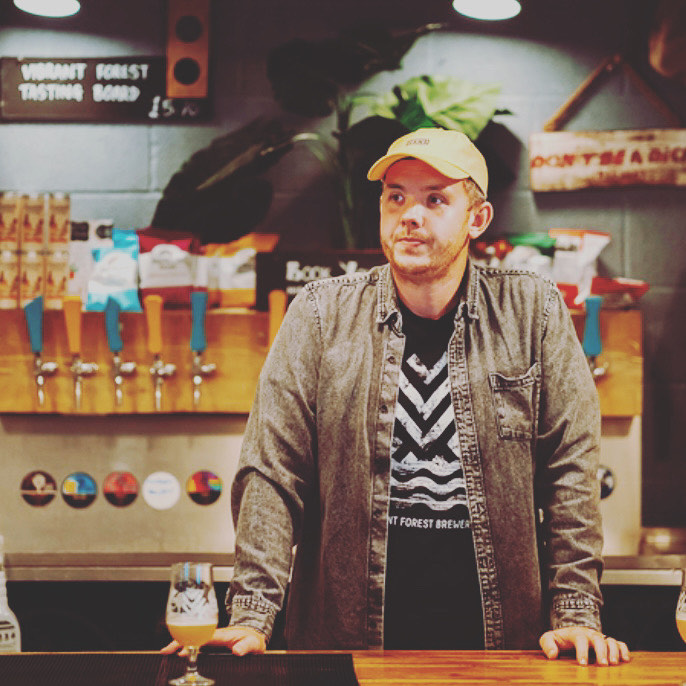
General Manager
Brewing began in Kevin’s small garage at home on a modest 1 BBL kit, producing about 175 litres of beer at a time. This was enough to make 4 casks of beer for local pubs and beer festivals .Our new modern brew kit arrived in April 2014, and the first (and nervous!) brew was Flying Saucer, a 4.3% light hoppy beer with citrusy American hops. During the wait for this new equipment, we continued to brew on our 1 BBL kit at our new site on the edge of Lymington, New Forest. We also built a small bar from pallet wood and opened it to the public on weekends
Over the next few years, our business continued to grow organically. We began hosting our own beer festivals at Brockenhurst Village Hall and expanded our brewing capacity. It became evident that we were outgrowing our space, prompting a search for new premises. In February 2019, after careful consideration, we signed the lease on four brand-new industrial units in Hardley on the edge of the New Forest. Our new home in Hardley has benefited from major investment, with modern facilities and a vibrant taproom that’s become a real hub for the local community. We’ve also expanded our original brewing equipment and built a talented, passionate team — all so we can keep doing what we love: brewing great beer!
Ryan joined shortly after COVID, initially taking charge of the taproom following a career in running pubs and bars. Around 18 months later, he stepped into a broader role overseeing the day-to-day running of the entire business, with Kev moving into a more strategic position focused on the bigger picture and… Read More