Building a Brewery for the Community: The Howe Beer Project Story


 Youtube Music
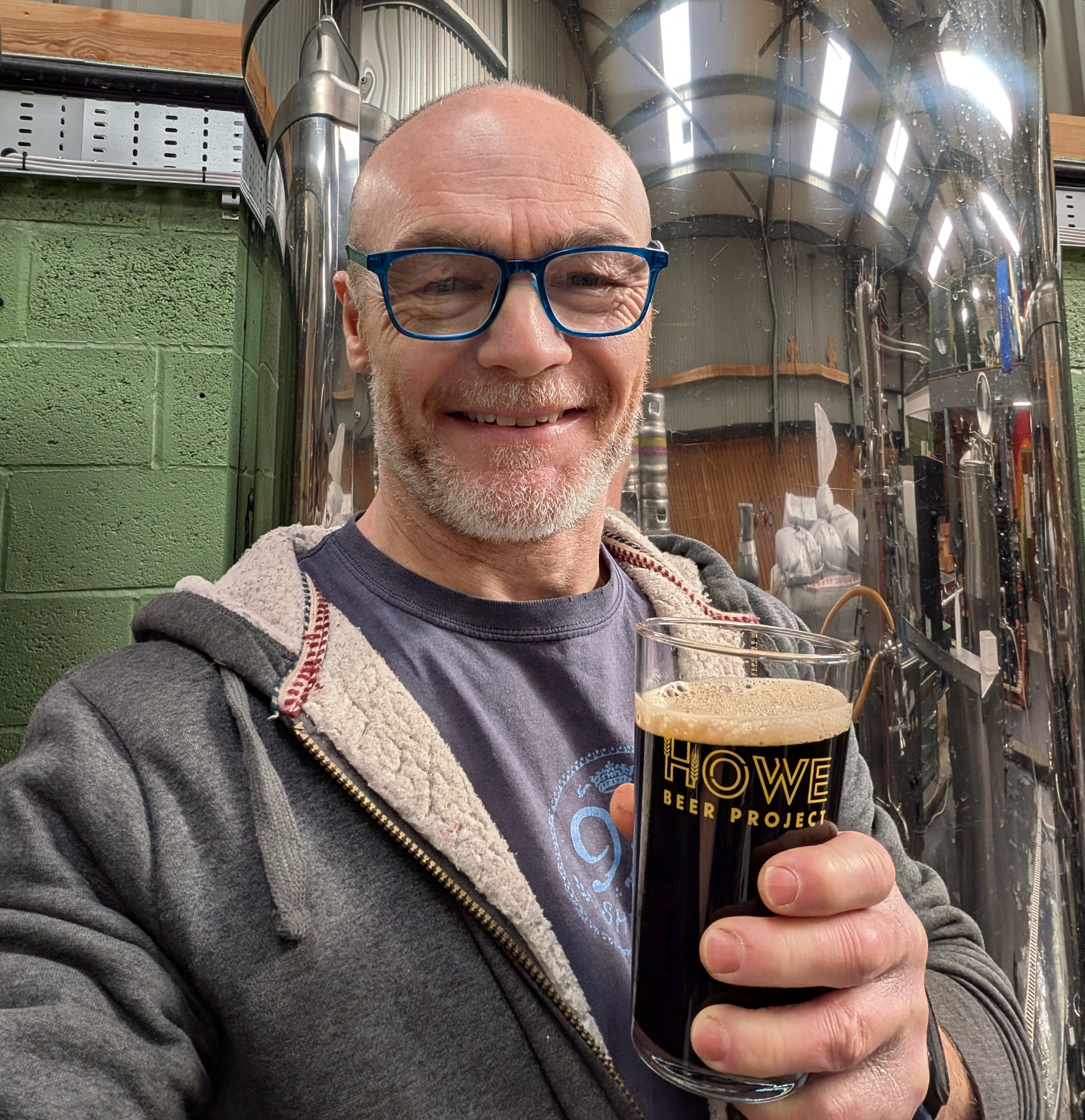
 This week, I’m joined by Kevin Kelly of Howe Beer Project, fresh off winning Best New Independent Brewery at BeerX.
But what really sets them apart? Community.
We dive into how Howe Beer Project was built with people at its core, creating a space that’s welcoming, inclusive, and designed to bring locals together. From turning a huge empty venue into a thriving taproom/brewery, to focusing on customer experience over chasing distribution, Kevin shares a different way of thinking about what a modern brewery can be.
We also talk about the realities of starting a brewery in today’s climate, the impact of their BeerX win, and why success for them isn’t about scaling fast, but about building something meaningful that people genuinely want to be part of.
If you’re into independent beer, taproom culture, or just the idea of creating spaces where people feel they belong, this one’s for you.
Proudly sponsored by @thekegwarehouse
https://thekegwarehouse.co.uk/
Howe Beer Project:
Website - https://www.howebeerproject.co.uk/
Instagram - https://www.instagram.com/howebeerproject
Facebook - https://www.facebook.com/howebeerproject
Martin (00:01)
Hello and welcome to another episode of the Beer Rep Chats with and proudly sponsored by the Keg Warehouse. Today I'm delighted to be joined by founder of Howe Beer Project, Kevin Kelly. Kevin, thank you for joining the show.
Kevin (00:15)
Hi, Good Afternoon Martin, how you doing mate?
Martin (00:18)
I'm very well thank you and yourself.
Kevin (00:20)
Yeah, we're good. We've been busy ol' time for us. So I'm getting five minutes to do something other than run a bit daft.
Martin (00:27)
Yeah, definitely. I can imagine you're really busy at the moment. Just winning the new independent brewery and so ⁓ yeah, the BeerX Awards. So I'm guessing you're getting a lot of trade coming in.
Kevin (00:39)
Yeah, we've got a few inquiries off the back of that. I think it's a feeling of arriving to a certain degree. I think one of the biggest things from that whole event was just how pleased people seemed to be for us. And that was brilliant. mean, Indie Beer is such a collaborative community. It was fantastic. People were psyched and that just felt pretty special.
Martin (01:07)
Yeah, it's amazing to be awarded an achievement for the hard work that you put in.
Kevin (01:13)
Yeah, I think a sense of a relief because you've been knocking your pan in for like at that point about 18 months and it's been really, really hard. And are you just kidding yourself on that you're a real brewery? Which sounds ridiculous, but I think a lot of people in the industry have that imposter syndrome, I think because so many of us started from sort of nothing and built it up. And you're kind of, are we the real deal? You keep dealing with all these sort of like...
fantastic breweries that are on the scene just now. And are we one of them? Can we count ourselves as one of them? And then that was awesome. And I think the confidence it imparts to ourselves, to the staff is really, really valuable.
Martin (01:54)
Yeah.
Yeah, that's awesome. So we're going to start off with, you know, what you was doing before Howe Beer Project You know, what was your, what was your line of work?
Kevin (02:04)
Well, prior to Howe Beer Project, I was the brewer over at Lock Leven Brewery in Kinross. It was a cracking little cask brewery. Prior to that, I was actually in forestry and arboriculture. I had worked 25 years in that game and loved it and still love it. Still talk to guys that involved in the trade. It teaches you how to work really hard.
It's a really kind of physical, really quite scary job. And then got the opportunity, I think the arms were just getting a little bit old, to jump in as an assistant brewer in Loch Leven and learn the trade on just sort of, cask beer, rolling firkins, and brewing some really, really good, you know, pump ales. And that was a great space to work in. Yeah.
Martin (02:59)
Yeah, awesome. So you wasn't doing any sort of like home brewing before you became a brewer down there? Right there, I should say.
Kevin (03:04)
Typical me, I do
everything backwards. I jumped straight in at pro. So I went straight from the forest pretty much into Loch Leven and then I got the home brew kit and I home brewed constantly. I would do like a full shift at Loch Leven and come home and fire up the grain father and I'd be stood in the garage at like midnight, you know, putting a brew to bed.
And I brew a lot of beer. You know, I was brewing all the time. And then developing my own recipes because of that, because you've got that kind of pro mentality, you immediately start developing your own recipes.
Martin (03:42)
Yeah.
Yeah, I went straight into all grain as well with a grandfather when I started learning how to brew. And yeah, it's no point in an extract kit because the satisfaction is just not going to be there.
Kevin (03:48)
Yeah, for sure.
It's not and it's I think cos you're pro, you know, I'm going to a brewery that's got established recipes They've got you know customers. They've got a consistency is key if you're going to experiment They were too small to have the pilot kit or too small to have people who are just like dedicated to developing recipes You have to go and do that yourself. You have to then back or you you're going on to the various like, you know, BrewKeg Tap or Malt Miler all these guys and buying in the bits and pieces
Martin (04:14)
Yeah.
Kevin (04:24)
and you're building up your sort of like portfolio of recipes and seeing what's possible. And there's a lot came from that when I work at Loch Leven as well. know, teaching yourself that, know, mean, the CIBD is really good for that, but you're taking that knowledge and applying it. that value, really, really valuable.
Martin (04:42)
Yeah, 100%.
Yeah, definitely. So what was the moment where you thought, let's start a brewery? That crazy idea that went through your head at some point.
Kevin (04:51)
Thank
I
mean seriously, I think as soon as I got the job in the brewery people started to ask me like so Kev when you starting your first brewery? I'm like I just kept batting that away I think because I've been self-employed before and then had went you know a lot of my life I've been self-employed and then you go back to being employed it was always difficult for me it's always going to be anyone that's been self-employed for five minutes that's like you're ruined you can't work
Martin (05:19)
⁓ it's, it's a scary
prospect, isn't it?
Kevin (05:23)
Yeah, to be your own boss, for better or for worse, you just can't shake that. And that kept on at me, but once enough people ask, it wakes the rat up and the rat wants fed. And it started to bleed into me and I was like, well, maybe I could do it, but now is a really bad time to start any business, let alone a brewery business. And we looked at some venues and then I think...
my wife Julia, and business partner, she kind of harboured the ambition to do it sometime. And then that kind of just sat there for a bit and we looked at some venues and discounted them. And then I think the real point would be thought, yeah, this could work. We were ticked off by someone about the venue we in just now. And they said, look, go and talk to these people. They're really nice. They might have something that would suit you guys because we really think that a brewery would work in Fife.
friends and your sub community here. So we popped in and saw Mo and Anouska our landlords, and we had this lovely little building and we're like, oh, that looks like a great little tap room and brewery. And they said, no, we don't want you to use that. And they walked into this massive hall and said, we want you to put it here. And I'm like, this is huge. What on earth am I going to do with this? I can't afford this.
and we talked to them about the rent and it actually wasn't a very usable space for much because of what had been used previously as like a soft play center. at that point we looked at it and thought, wait a minute, if you filled this with people and made this a community event space and it was like the missing bit. We couldn't reconcile how are you going to make enough money to support yourself because of the way the business is.
but we could see that opening the market here. mean, the vision that we suddenly had, we're like, my God, we could do this, we could do this, we could do this. And that was it. I think at that point, we knew we thought potentially this building, we were like, yeah, we're doing it. ⁓ And we don't really have a choice anymore, you know?
Martin (07:38)
Yeah, definitely. mean, yeah, so you had that little spark of an idea of what you could use with the space and kind of went Well, actually, no, we can actually make this work. We don't need the whole space to be filled with fermenters and brewing equipment. And we can use the rest of the space to open up your tap room and bring in the community. So. ⁓
Kevin (07:48)
Yeah, that's right.
Yeah, for sure.
Martin (07:59)
Yeah, so you've just won Best New Independent Brewery. We touched on it right at the start at BeerX at the Indie Beer Awards. ⁓ How does that actually change your day to day? How has it physically changed how you're brewing?
like in regards to how many orders you're getting in now from that.
Kevin (08:16)
It has definitely created, we'll probably get to this later, but we don't do trade to speak of. ⁓ We've only just recently started to do small pack and that very obviously generates interest. So I think straight off the bat your getting requests for people, will you ship stuff to XYZ? And because we don't do trade large pack, that's not really been ⁓
much practical use to us. I think it has created a bit of a stir locally. So that's, that's really important for us. You know, we've had that kind of interest. I think when you walked into the bar the night after, know, Friday after the BeerX and the whole bar erupted in applause because they feel like they own it a little bit as well. So everybody's really excited about it. So yeah, that's kind of the...
Martin (09:12)
Yeah.
Kevin (09:13)
the main component is it just generates a bit more interest in the trade and credibility. Because there's a lot of breweries out there, a lot people say, oh yeah, I'm going to be a brewery. It is an extra sort of, sort of, a bit more support in terms of like, we are a brewery, we're far more credible now, I think as a business. So that creates more work. Yeah, it creates more work, it creates an expectation.
Martin (09:36)
Yeah, bit of recognition as well.
Kevin (09:44)
And that's a good thing. This is good. You know, it's good busy. Yeah.
Martin (09:47)
Of course.
Awesome. So what do you think you're doing that other new breweries aren't right now? What's the difference do you reckon?
Kevin (09:57)
What are doing? ⁓
We've kind of skipped the farmers market small pack route. Everybody, especially when I've been in beer for a while, everybody does that sort of get their feet wet, they start doing small stuff and then they go out to the farmers markets and they chip away at that for a bit and then they maybe roll some firkins through some cellar doors.
it never really gets big enough or they end up in a where they realise that it will never sustain them and it kind of bumps along for a bit. We skipped it and we just went straight to massive taproom. You know, this is kind of like the bigger businesses tend to get to this point eventually. you know, they establish the trade first. We've done it exactly the other way around.
we established the tap room. And it's only now we've got the really solid base of tap room that we're looking at trade. Yeah.
Martin (11:06)
I think a tap room is the main thing for any small independent brewery in terms of getting your beer known.
sharing your beers locally to the community, not having to run around to all these different venues to try and get your beer into their pubs or other taprooms. And you've got a base to sell your own beer for people to come to you and buy your beer and try it and everything. I think it's really important.
Kevin (11:37)
It's massive. I think I learned that from Loch Leven when I looked at the amount of effort that went into keeping the trade arm going. The amount of liquid we turned over, the van, the dray runs, ⁓ chasing up steel constantly, chasing up invoices constantly. And then on the other side of that, the tap room that was running away and ostensibly seemed profitable.
Martin (11:54)
Yeah.
Kevin (12:03)
because of the margins in the tap room. And you're like, well, this is pretty straightforward in terms of economics. And I think it's all because of that, we thought about beer last. Everybody's like very, very beer focused. I'm a great brewer. I make great beer. There's a lot of good breweries that make really good beer. We concentrate.
the vast, certainly in the early days and very much now, the vast amount of our energy goes on the customer experience and creating an environment that they really want to be in. And then the assumption is that I have to then come back in here and make really, really good beer because it really good beer is important, really good associating beer is important. But if there's no one here, you know.
Martin (12:58)
Yeah, no beer to sell.
Kevin (13:00)
no beer to sell your sat looking at it.
Martin (13:02)
Yeah, definitely. So, so that will talk about your, your tap room. ⁓ it's Colorado themed. I read, ⁓ so you, so what, made you, what, made you decide to, you know, give it that sort of, ⁓ you know, inspiration from, from that sort of a theme.
Kevin (13:09)
Colorado themed
North American
style taproom, think is the sort of like blurb. That's what we knew. Jules and I, Jules is Wisconsin. She's from Milwaukee area originally. And she spent 15, 16 years in Colorado. I was there for about nine of those years. And we loved the sort of beer culture that's prevalent in Colorado. You'll know Denver, it's an absolute mecca.
in terms of craft beer. But the pubs, they don't have pubs per se. It's a very different look out there. Now I'm into my climbing. mean, for a long time it was ultra running and outdoor stuff. If you go into some of these sort of big, airy, bright bars in Colorado, everybody in the place looks like they could like run a marathon or climb E4 off the bat. They're all snowboarders or skiers or you know, it's just a really cool vibe where
beer especially isn't synonymous with the opposite of sport. It's very much integral and intrinsic to the outdoor experience, to any sort of, know, so many running clubs and climbing clubs and they all meet in these areas. And we really like that. So, you know, our beer culture was these really cool bars where the beer was awesome, where the people were really cool and they were really bright and it was kind of, it was a wee bit.
how do you say without being derogatory, it was different very much from British traditional pub culture, which is very masculine, ⁓ very much, you know, kind of a little bit dark, carpeted, you know, maybe not the most family friendly environment. Yeah, people aren't, you know, when that was a culture that we liked, we wanted something that was
Martin (15:07)
Yeah, very dark interior.
Kevin (15:17)
bit more optimistic and cheery and bright and the behaviours different as well. It's far more inclusive. We wanted to make the space comfortable for everyone. So there's no one gets dominion over the space in here. And the space is very varied. There's sort of like discrete areas throughout. So you can have families at one end and you can have, you know, guys coming in and, you know, having a few beers together at another end. And it's fine, it accommodates everyone. And that's, know,
You look at sort of New Terrain brewing in Denver, Denver Beer Company, even the Wynkoop, which is probably one of the older ones, this is kind of the environment we've got. And we missed that. We wanted to make that.
Martin (16:01)
Yeah, there needs to be more of that as well in the UK in general, wherever you go. Is that maybe the thing that why pubs are closing down? it because it's not inclusive to everyone? Who knows? It could be a reason. I'm sure it's probably one of them, but not the main. ⁓
Kevin (16:19)
I don't
want to upset anyone. I think someone said to me the other day, we were having a particularly busy night and they said, the pubs are running scared from you. And I thought for a second, I was like, actually no, I said, because none of the people that coming here ever regularly went to a pub.
⁓ I don't think I'm impacted on our locals. We have some very, very good traditional ale pubs nearby, really good locals, and they definitely have a role. But we are catering to a market that probably isn't going there regularly.
Martin (17:00)
Yeah, yeah, I make you right. mean, there's everyone seems to think that, you know, everyone's in competition, but when you're not taking the local pubs customers, you're creating new ones who might have felt a bit
uneasy going to these local pubs maybe and now you've created an atmosphere where they're welcome as well as everyone else and that's what's great about breweries, tap rooms is that everyone's the space is inclusive to everyone and which is amazing. ⁓
Kevin (17:33)
And it
seems strange it's not about the beer. It is about the beer, it's not about drinking to excess. People behave slightly differently. It's just a bit more relaxed, you know.
Martin (17:42)
Yeah, 100%
Yeah,
it's a chill people come out to have a good time rather than to get wasted.
Yeah, definitely. So talk about beer culture. What made you think what's missing in beer culture right now? What do you think needs to exist?
Kevin (18:02)
I think a bit more of what we've just been saying, those spaces. There's been some stuff, I got quite cross about it, there was some posts about those pubs quite recently and very publicly said, right, we're ⁓ banning kids. ⁓ I can understand that, it's up to them. I think it does then give certain groups dominion over a space then and it creates separation.
Martin (18:15)
I read that, yeah.
Kevin (18:29)
I think we need to have something more akin to what you would see in the United States. Wisconsin is a great state for this. ⁓ Jules can remember as a kid being taken to bars all the time. And they're like, you'd never take a kid to a bar. A bar is no place for a kid. I'm like, well, maybe because the behaviors in bars isn't conducive to that. And maybe if it was, you would be fine with it. So what needs to change? Ban the kids or ban the behavior? ⁓ I think that it needs to change a little bit. The behavior. Yeah. People say, well, you know.
Martin (18:55)
definitely the behavior.
Kevin (18:59)
So I think more acceptance of families, it is a difficult balance to strike because you will get some, know, some people come in and there is sometimes, some groups can be really quite noisy, but there's plenty of space in here that everyone can go in different directions. And most people are pretty respectful of one another. So, you know, you can't take a child to a tiny little pub.
and constrain it to table and say, you have to sit here and sit quietly as soon as these guys are at the bar at each other's. Swear at one another. So we have to, we're lucky in that we have that space that kids can spread out a little bit so they don't feel so constrained if we cater for them. I think we need to be a bit more accommodating to one another and that's possibly missing from the pub culture. Too many people, know.
Hard to say. ⁓
Martin (19:54)
It's hard to narrow down
to one thing, but I think you're right. Definitely. It's one of the main reasons is, you know, just, they just need to be more inclusive to everyone and be more welcoming and obviously not tolerate bad behavior. don't, you know, I don't think anyone, I don't want to go into a place and see a fight kicking off or, you know, or people shouting and swearing at each other or throughout the whole of my drinking session or, you know, enjoying my beer. You don't want that.
Kevin (20:22)
Yeah, it's not just us, I mean, two guys talking about this, but women, ask your female friends, just say them, know, what's it like walking in a pub by yourself?
Martin (20:32)
Yeah, yeah, exactly. It's intimidating for most.
Kevin (20:35)
Yeah, that's wrong. ⁓ And people don't feel timidly like that in our place. ⁓ And then community, we're absolutely lost without community. I think you're looking at this atomisation of society. I would argue that there are some nefarious actors purposely driving us apart because it suits their ends. create spaces of community.
Martin (20:37)
Yeah.
Kevin (21:03)
I mean, a lot of local village pubs have been doing this for hundreds of years. We need to double down on it. I mean, to do it in our towns and our cities and, you know, the politics of belonging, creating spaces where we have had, especially older people, have said that our taproom has changed their lives because up until then, they were just sitting in the house, watching telly and not talking to anybody. And we kind of coaxed them out. And now they come in here just to see who's here to talk to, because there's always someone to talk to.
Martin (21:32)
Yeah.
Yeah. I see. I've seen a new new thing that's been ⁓
Kevin (21:33)
And that's it.
Martin (21:38)
started up called empty chairs where they, they get people to come and have a chat and sit down with other people likeminded people that are looking to come out and speak to people. And yeah, so they'll be like, there's 10, 10 empty chairs in this pub in this area. And there'll be people that are going down there that haven't got my friends or you know, just want to go out and meet new people. And they create a space for people to come and get together. So instead of being on their own, there's nine other people doing exactly the same thing as them. And
sitting down and enjoying a drink. mean, I think that's absolutely wonderful. Yeah, it's beautiful it's beautiful.
Kevin (22:10)
That's brilliant
I think
for me as a ⁓ landlord now, I'm a brewer but I find myself somehow owning a massive pub. That's part of the job. It's definitely, you are very much the icebreaker. you know, a quieter time, if you've got a regular at the bar and they're stood there themselves, you've got to have that mental list of the other people in the room that might have similar interests. So you can kind of point them at one another. You can say, you should talk
Martin (22:42)
Yeah.
Kevin (22:43)
to such and such and then before you know it they're at the of the bar and away they go.
Martin (22:46)
Yeah.
Yeah, definitely. Yeah. Definitely. It's like, um, you know, introducing people with similar interests so they can make me friends, make friends, have a good conversation, enjoy their, their, um, their day out and, yeah. Um, right. So we're gonna, we're gonna hit onto our, we've got a new feature, which,
listeners can submit their questions to the current guest, which is today is you. ⁓ So this is from an anonymous ⁓ listener. yeah, so they were asking. ⁓
They would like to know what was the biggest challenge that you had getting your brewery off the ground and how did you overcome it? Also, what were your main positive thoughts while you were growing the business?
Kevin (23:35)
That's the most difficult. It's the paper work
Martin (23:43)
You
Kevin (23:44)
Yeah, yeah, no way that sounds that it is literally paperwork The there's so much so many layers to it. You have your sort of planning and your licensing and Then you have the new APPA (Alcoholic Products Producer Approval), regs I mean, I think we missed it by a month if we had submitted a month earlier We'd have just got the rubber stamp that they used to do and now it's effectively an audit
any sort of finance, even the British start-up loans scheme is great and really agreeable terms, but the paperwork involved in accessing it is, I don't know how, I have a Julia, Jules has spent a lot of time working in the civil service in the US, which is an incredibly bureaucratic world. And she has an endless patience for these things.
Martin (24:31)
So, poof.
Kevin (24:42)
They're a process and you have to respect the process. And fair credit, the people involved in that process by and large are invested in you succeeding. So we've had really good support from the people that are administering the systems, but there are I's that need to be dotted and T's need to be crossed. And sometimes it can be extraordinarily frustrating to kind of wade through all this stuff and to spell things out over and over and over.
again, especially when comes to finance. Level of detail people want ⁓ and the money trail. Every pound that comes in nowadays, you have to account for where it came from and where it came from before it came from there. And I certainly felt that if I hadn't had that, Julia's patience just to just respect the process, let it run its course, or we wouldn't have succeeded. We would have just given up at the right time.
it is quite a burden
Martin (25:39)
Yeah.
there's a lot of paperwork involved when you're, especially when you're getting investors and know, start up loans and things like that. I mean, I've looked into it myself and it's just, where'd you start? Where'd you start?
Kevin (25:53)
It's
utterly intimidating. feel overwhelmed almost instantly. ⁓ So yeah, think that was pretty hard. What kept us positive?
Martin (25:58)
mm.
Kevin (26:07)
Very early on, before we really went to the council or anything, we were part of a larger site. Balmalcolm Den's site had been a much loved outdoor play area and it changed. I mean, they sold it off, lot of the equipment got cleaned out and it was sitting in a sort of, not a derelict state, but a redundant state. And then the new owners were keen to engage the community. So they held a meeting and asked us to host with them.
to explain the changes because by that point the rumour mill was going crazy. We were, know, I think they linked it with an abattoir with all sorts of wild stuff. So we thought we could assuage those fears and we held a meeting and there was about 40 people from the immediate village there and we said we're going to open a brewery and a tap room and we were kind of waiting for the pushback because people would think it would be like, you know, they brought in, the smells are really, really strong.
machinery going and lorries in and out, you didn't realise how small we were speaking. And I gave a presentation and the first question, the hand shot up in the air, an was like, when will you open? was like, okay, dokie I think we're in the, so I think that kept, and throughout the whole process, so many people came and helped. family members, obviously, but friends.
Martin (27:19)
Brilliant
Kevin (27:33)
Anytime you were struggling with something, somebody rushed their assistance because they just wanted this to succeed. They really saw the benefit. And I think that you were reminded of that, humbled by that. So many times you were like, we have to do this. Anytime it really hard, we're like, no, this is going to happen. And it kept your head up.
Martin (27:49)
Yeah.
Yeah, definitely. Yeah. That's great that you had the backing of the community. I mean, that just spurs you on, doesn't it? To make sure that your project succeeds and yeah, you've got the project in your, your name, in the, in the brewery name. So, um, it certainly was a project and a successful one so far.
Kevin (28:01)
next year.
Yeah, that was the project part.
Martin (28:11)
Cool. So what does does growth look like for Howe beer project going forward? it ⁓ maybe another venue or something else?
Kevin (28:21)
Growth, okay, growth.
Martin (28:23)
Would
you like to expand or would you just like to keep it, you know, how things are going at the moment?
Kevin (28:28)
think growth, keep it as it's going. this is working. I think we'd like to stop firefighting. I'd like to have routine. What's the least on fire thing for me to deal with today? I mean, there's so much to go through. I'd like to get into routine. I'd like to have some sort of capacity, stability, and then you can pursue efficiency because I think I really have to improve the beers.
Martin (28:38)
Yeah.
Kevin (28:59)
So growth is only going to go so far for us. I always say, when someone's looking at something, my staff or something like that is like, what's your goal? What's the goal? And people say the goal is growth. Well, growth's not a goal. You throw it, it's no, but then you're like, we have to grow. So what's your growth then? What's the goal of growth? The goal of growth is usually just profit.
Martin (29:15)
Yeah, it's a thing that happens, isn't it?
Kevin (29:28)
and then money. So ours isn't that. our goal is, and this is because some people will roll their eyes at this and they'll oh, I'm being corny. Our goal is literally the community. the world is on fire. And we are creating a little space in here where it's how you wish the world worked. And that's
Martin (29:28)
Yeah.
Yeah.
Kevin (29:55)
the goal, more and more happy customers, within the constraints of this building, ⁓ I am chasing the trade because ⁓ it gives our customers someone reliable to trade with. ⁓ it moves, you know, shortens the supply chain so they're getting quality beer made locally that champions Fife because Fife is an awesome barley producing region.
And we should have a brewery here. We used to have dozens and dozens of breweries, tiny breweries all over. I imagine a lot of the UK was like that. So, we want to keep pressing that message. But in terms of sort of traditional idea of growth is like, well, we'll get another venue, we'll get a supermarket contract and all that turnover. You know, we're really just not interested in it. I would like to...
Martin (30:28)
Yeah.
Maybe, maybe, maybe you'll
become a big destination where tourists want to come to try your beer because you, you know, your name's, your name's getting out there, but they can't get you anywhere else. So there's no option, but to go to Fife and visit you and you become a destination. Yes. You be exactly. That's the vision there, right there. We've become a destination for people to come to rather than you shipping your destination to them. ⁓ Yeah, that's, that's the way to be, think. Yeah. Get people to come to you.
Kevin (30:56)
Get to Fife
I mean that's it, it's
the experience of beer, that's what we sell It's the experience of beer.
Martin (31:16)
Yeah, exactly. Yeah,
exactly. And what more of an experience to come and visit you guys down in Fife. I'm definitely going to try and get up there. I've not been to Scotland much. I'm definitely going to come over and visit and see, I want to see everything in its glory. Yeah.
Kevin (31:22)
Yeah
much.
There's so many cool birds out Yeah, mean,
you're probably familiar with the landscape of Norfolk, but it's like that, just seas of barley. know, the spring barley is coming up, winter barley is well on, ⁓ and the patchwork of the rapeseed oil fields as well. It is a cool place.
Martin (31:45)
Yeah.
Yeah, no implants.
Yeah, definitely. My old man's not too far from Scotland, he lives in Anwick. So maybe a stop along the way, take a trip up and then come back. ⁓
Kevin (32:00)
Yeah, cool.
We're on the East Coast, man. So yeah,
just close out that question. Yeah, is it? Growth is the state of growth is the ideology of cancer cell. I think it's Edward Abbey said that. And we'll grow as far as we can within our means. really our ambitions in terms of financial ones are pretty modest. We just want to pay some wages. That's pretty much it.
Martin (32:17)
Yay.
Yeah. Yeah. Just,
this, just be sustainable, everything to be sustainable and community happy, locals happy, everything, everyone's staff happy. That's, that's what you want. That's the, that's the dream, isn't it? That's what you want. And yeah. So, ⁓ any, about future, any collaborations that you're interested in doing collaborations with other breweries?
Kevin (32:36)
Yeah.
Yep, that's it.
⁓ Yeah, I think in terms of collabs who did we have lined up? I have not got, I can't speak specifics because we've not come out in public. There's certainly local breweries we want to do stuff with but some of them are interesting stuff. We've got a collab hopefully coming up soon ⁓ with a kitchen garden. It's got an enormous amount of green hops that they're growing.
We're excited about We've had a whiskey producer approach us this recently ⁓ looking at barrel age so we can barrel age and then sell the finished product both in our tap room and their tasting rooms. So that's a really cool hookup as well. But then you've got the more conventional collabs. We're trying to get one in, I think I can mention this out loud because Will's really good friend, but Cullach Brewing in Perth.
Martin (33:20)
awesome.
Kevin (33:50)
another brewery with a cracking sort of like microbrewery tap room model. Every time we put his beers on, they sell very well. And we would love to, you know, do a collab with those guys. I think that's really logical thing to do.
Martin (34:08)
Awesome. Yeah,
yeah, definitely. So what's been your successful beer so far? What would you say is your, you know, the pinnacle of your brewing expertise? What are you most proud of?
Kevin (34:22)
What am I most proud
of? ⁓ I think of the beers that I've worked the hardest on. think old muddy boots. That's the one where I had a... I used to be embarrassed to admit there was eight malts in it and now there's ten. ⁓ I really do think that the last editions closed it out and I thought, right, know, mic drop, stop.
This is the beer that I've always wanted to make. That's a really, really solid beer and I think we'll make that for a very, very long time in its current format. No, mean, the beauty of the 10 malts is that something changes. You can usually make a wee change and most people won't notice. ⁓ But yeah, I think that's the one I worked the hardest on.
Martin (34:52)
Yeah.
so there'll be no more adding of grains, not 12.
what's, what do you think has been the hardest decision you've had to make since, you know, starting the business, starting the brewery?
Kevin (35:25)
⁓
that, yeah.
I think opening without our own beer, because of the sort of change in the APPA regs, it took a very long time to get approval. We had the kit it was all in place. And we'd filled in all the paperwork, but then you're held up sort of waiting for the site visit sort of thing, so it's spun on forever. And we desperately needed to turn over money. We had.
blown through the startup cash. We spent it very, very frugally. We got really good value for money for it, but at same time, you have to start making money. And because we're the taproom model, we had the alcohol license in hand so we could sell beer. So we could buy, you can go onto sellar and we still go onto sellar on a weekly basis because we keep so many guest lines as well. There's so many cool breweries out there. ⁓
Martin (36:03)
Yeah.
Yeah, definitely.
Kevin (36:23)
to open the doors and not have our own beer on tap. That for me, personally, it was really hard. And we thought about stalling.
Martin (36:31)
How many people came in and went?
How many people came in and went? Where's your beer? What's your beer? Yeah.
Kevin (36:36)
it was like a month maybe more
before we got permission because we started trading in like May but we said we did something soft opening and I think that's friends and family special all right this is really good what did you put in it so I didn't make it and you're like that I heard that over and over again until we were given you know permissions to produce ⁓
Martin (36:54)
Yeah, I bet it'd be a bit heartbreaking
as well to like, you know, people thinking it's your beer and it's not and then they probably go, ⁓ where is your beer? So yeah, I can imagine that was, it does, yeah, it would, wouldn't it?
Kevin (37:06)
The credibility goes to zero at that point. You're like, ah, are you going to burn? Yeah, and that's hard. I
think we had to do it. We had to bring in some cash. Yeah, I think that's
Martin (37:17)
Of course. Yeah. Yeah,
definitely. agree with that one. That's a definitely a hard one to get through. So, ⁓ we're to hit you with some quick fire questions to, to wrap it all up. So first thing that comes into your head, hopefully, ⁓ a style of beer that you think is underrated.
Kevin (37:29)
Quick fire.
80 Shilling and or ESB, which is equivalent I think. 80 Shilling and yeah, I mean, it's a brewers dream as well because it's got a modest grain bill, very little hop, but the expression in terms of, you know, fruit and toffee and ⁓ slightly ESB would be sort of equivalent, but it's a, it is a little bit more bitter I mean, I suppose it's in the name, but
Martin (37:41)
Yeah, cool.
Kevin (38:02)
your dark roast malts, there's so much complexity. You can go nuts with your crystals and your caras and all that. Yeah. It needs to, yeah. More of that,
Martin (38:13)
more
more more more styles more styles to be brewed by breweries thank you very much more of that and ⁓
Kevin (38:18)
Yeah, all
kind of old-fashioned styles are kind of out of fashion, but maybe not so much now. There's been a few boos of people. Yeah, thankfully so.
Martin (38:22)
Yeah, I think a lot of them are coming back now. A lot of these old
styles are definitely coming back. I mean, I'm even finding myself who I'm big on hazy beers and always have been for a number of years. But even now I'm moving away from hazies and I'm looking at, I want to try more different styles. I'm getting bored of hazy beers now. So yeah, I want to try some old styles, but I want to see a resurgence of the recipe. Not keep it traditional, but give it a twist, you know know.
Kevin (38:45)
Season one.
Yeah, and then Saison is another one. It's like, you know. Yeah, and that's a style that I think definitely could do with a resurgence
Martin (38:55)
I love a Saison.
Yeah, especially now when it's spring and summer, can be so refreshing a Saison And yeah.
Kevin (39:09)
Yeah, ours is
a super crisp, super fizzy. ⁓ Yeah. I'll let you see that. Hey! I totally don't have one. ⁓
Martin (39:15)
Tasty. Should be a salesperson. So next one.
One brewery could be UK or it could be global that you really respect.
Kevin (39:30)
That's like what's your favourite movie? That is really hard.
Martin (39:34)
I I know.
Or you can name three, maybe. Give your top three if you're struggling with just one. Give three.
Kevin (39:43)
OK. ⁓
You know when I was starting all this, I talked to a guy called Fergus Stokes. He's the brewer, owner, chief bottle washer at a tiny brewery called Ardgour Ales in Ard Market Peninsula. And I'd met him through Zeba, the Zeba community. And I was kind of like, do I start this? If I build it, will they come? And he has a brewery in the, I think there's like 200 and-
60 people or something live in the whole peninsula which is huge. You know you can get there by ⁓ a ferry or a 68 mile drive. That's how you get to the brewery. Off of the main road in the middle of nowhere. And he is incredibly community driven and he runs that brewery successfully. And I think if he can, when I looked at that I thought if he can do that there.
Martin (40:16)
Yeah. ⁓
Kevin (40:42)
my God, how can we not do this here? And Fergus was like, yeah, he was like, yeah, he was totally, if you build it, it will come. And he was another one who was like, they need it. It's like group therapy a tap room. He's the one who sees the benefit. And I think, yeah, I think that the other would be ⁓ possibly Cullach
Martin (40:44)
So that was your inspiration then.
Kevin (41:11)
because when we moved back from Colorado and we couldn't find what we were wanting, we went up into Cullach in Perth and they've got a cracking sort of taproom. And it was the first time that think Julia had said that we felt that we'd kind of found what we'd left behind in the States. And they've been doing that up there in a cool space with little fanfare really well for quite a few years now.
It's like a hidden gem. Shouldn't be hidden. Everyone should go there and have beers and pizzas. Pretty good pizzas. Yeah. You said three. You said three. So I could have one more, right? It's hard, but then you're going to say, well, about fyne ales? Because they're just amazing. They're like, absolutely fyne. And Loch Lomond, I mean, those guys are both, they give so much back. Yeah, but they also give so much back. They're very effort that Jamie and Fiona put into craft.
Martin (41:48)
Steamed pizzas hand in hand. Yes, one more, yes.
yeah. Yeah.
luck lomond, they're getting great beers.
Kevin (42:10)
Indie beer and craft beer in Scotland is huge. You know, it goes way beyond we just make good beer. Yeah. Can we give them joint? yeah. And then there will and then Moonwake. Moonwake make tons of good beers, but they are just, they run a sitcom almost. Their can content's brilliant. They can art everything that they do from of such.
Martin (42:28)
Yeah, yeah, yeah. Yeah, it's amazing. Yeah. They've got a really good person doing that.
Kevin (42:38)
The socials and everything is just so on point. And it's a good beer as well. Yeah, sorry. Vinny's lagers are amazing. Vinny and Scott are good. There's a few other guys down there, it's like, yeah, sorry. That was five. Was it four? Five. Oh man, that was an impossible question. That was impossible.
Martin (42:42)
Yeah, it's amazing. Yeah.
There was a lot mentioned there, but all definitely, definitely worth the mention. All of them worthy.
yeah, we're going to end up on this final question. This isn't a quick fire one, so you can take your time with this one. what would you say to someone thinking of starting their own brewery in 2026?
Kevin (43:19)
Be very clear in your mind what your goal is, why you're doing it, and look really hard at that goal and ask yourself if it's worthwhile pursuing.
I I have entered into this ⁓ because we wanted to accrue community and I really like the lifestyle choice that this is, because it's a lifestyle choice. Don't make any money. We pay people's wages, there's some very happy people, but it's you're not gonna be, ⁓ it's gonna be a hard, hard, I mean there's some very...
savvy operators out there, some really good breweries are expanding quite quickly and they're probably gonna do really, really well. ⁓ But for most of us, we won't. So you have to really ask yourself, why am I doing this? And if it's because you wanna be surrounded by people in your bar watching 150 people just slam your beer all afternoon ⁓ and rave about your space, if that's what's motivating you, yeah, do it. But you have to be clear.
⁓ why you're doing it because it's a hard hard hard road to go down. Yeah and if you get your motivation right and you dig your motivation and you're passionate about it and you're sincere about why you're doing it then you'll be solid you'll get it done.
Martin (44:36)
Yeah, yeah, definitely.
Yeah, the passion, you got to have the passion there. You got to have the goal, like you said, and the drive to keep going because it's going to be tough. It's going to be tough. So yeah, that drive, if you've got that drive in you or if you've got people around you that have got that drive to keep you pushing on. ⁓ Yeah.
Kevin (45:08)
You have to enjoy that process. I think you've got to be excited about it. You've got to be excited. For me, I felt like I couldn't not start the brewery because it struck me as the scariest thing to do. It really frightened me and I really, there were some days I sat because it took a couple of years of really, you know, business plan, thinking about it, looking at it, reading the beer report, doing research.
Martin (45:10)
Yeah.
Kevin (45:34)
All the time, there's a bit of me that says, well, why can't you be normal and just keep plugging away in a smaller brewery, working, know, I was, you know, 30 hours a week and coming home every night and having weekends off and getting paid holidays. Why are you not content with that? And I really frustrate myself, but the passion is there.
Martin (45:56)
Yeah.
Kevin (46:00)
I'm a high risk person, I pursue high risk things. I think I thrive on stress. yeah, I'm addicted to cortisol. I'm probably hypertensive. So yeah, think you've got to ask, look at your motivations. if you back your own motivations and you think, yeah, this is totally what I want to do, do it. But ask that question.
Martin (46:08)
Can I have some of that then please.
Kevin (46:28)
pretty thoroughly of yourself before you start or you'll run out of steam halfway through.
Martin (46:33)
Brilliant that's definitely ⁓ wise words there for anyone who's looking to start their brewery. ⁓ Yeah, 100%. That's great. Well, Kevin, it's been absolutely amazing to hear your journey. ⁓ And I'm so happy that you're you're thriving and you're doing well. ⁓ I love to see independent breweries doing really well. ⁓ And yeah, thank you for coming on the show.
Kevin (46:37)
Thank you.
Martin, thank you very much for getting in touch and speaking with me It's been really exciting. No one asks me to talk. No one's telling me to shut up all the time. This is brilliant.
Martin (47:06)
No, no,
no, we could be talking all day long, but obviously we have to cut it short.
Kevin (47:11)
Come on
up, get the train up from Alnwick get train to Ladybank Station, a wee walk past some barley and then we can have a pint and hammer at the rest of it.
Martin (47:22)
I'm gonna hold you to that definitely when I've got some spare time I'll definitely pop up. Yeah so thanks again and yeah this is until a couple of weeks time and we'll see everybody back then and yeah until then catch you later. Cheers.
Kevin (47:24)
Yeah, we should.
Fun fact.