Burton Roots, Cornish Beer and the Rise of Bluntrock


 Youtube Music
 Key Takeaways
- George Parker Collins grew up surrounded by brewing in Burton upon Trent before starting his professional career at Sharp's Brewery and later refining his modern hop techniques at Padstow Brewing.
- Bluntrock Brewery originally started during the pandemic inside four shipping containers in Rock, North Cornwall, utilizing a tiny 150-litre brew kit and plenty of DIY grit.
- After demand quickly outgrew their initial setup, co-founders George Parker Collins and Hugo successfully bid on second-hand equipment from Boxcar Brewery at auction, forcing them to scale up rapidly.
- Bluntrock's standout beers, such as Pagan Juice and the Burton-inspired best bitter Ambassador, highlight the brewery's commitment to blending modern craft innovation with historic brewing traditions.
- Operating an independent brewery in Cornwall presents unique structural hurdles, including heavy seasonality, limited freehouses, and fierce competition for local market access.
What does it take to build an independent brewery from the ground up? In this episode of The Beer Rep Chats With, Martin sits down with George Parker Collins, co-founder and head brewer of Bluntrock Brewery in Rock, North Cornwall, to hear the story behind one of Cornwall's most distinctive independent breweries.
George grew up in Burton upon Trent, surrounded by brewing. His parents met while working at Allied Breweries, and his childhood was spent around Tower Brewery, giving him an early connection to brewing before he even realised it. At 18, he moved into the brewing industry and began his career at Sharp's Brewery, gaining experience of the standards, systems and discipline of a large-scale brewery.
He then moved to Padstow Brewing, where he went from working within a large brewing team to effectively running the brewing operation himself. It was at Padstow that George began experimenting with modern hoppy beers, one-off releases and canned beer, discovering the ingredients and techniques that would eventually influence Bluntrock's brewing philosophy.
George explains how the idea for Bluntrock started with a simple ambition to build a brewpub in Rock and Polzeath where beer could be brewed and sold directly at the source. That dream eventually became reality through four shipping containers, a tiny 150-litre brew kit and plenty of DIY work during the pandemic.
The story didn't stop there. After demand quickly outgrew the original brewery, George and business partner Hugo took an unexpected gamble at the auction of Boxcar Brewery's equipment. They won the bid and suddenly found themselves owning a much larger brewery, despite having nowhere to put it.
George talks openly about the challenges of scaling Bluntrock, moving into the new brewery in 2023, dealing with second-hand equipment, building a team of almost 30 people and expanding to three taprooms.
We also get into Bluntrock's beers and brewing philosophy, including Pagan Juice, the beer inspired by George's Cornish cookouts, the distinctive Bluntrock artwork and the story behind the brewery's "bucket head" characters.
George also discusses one of the most fascinating projects in the brewery's history: Ambassador, a Burton-inspired best bitter that led to an 18-month research project involving historic bottles of Bass, Allsopp and other Burton beers and an attempt to recover historic brewing yeast.
The conversation also explores the challenges facing independent breweries in Cornwall, including tied pubs, limited freehouses, seasonality and the difficulty of getting beer into the local market.
Bluntrock Socials:
Shop - https://www.bluntrockbrewery.co.uk/pages/shop
Insta - https://www.instagram.com/bluntrockbrewery/
Facebook - https://www.facebook.com/bluntrockbrewery/
Frequently Asked Questions
Who is George Parker Collins?
George Parker Collins is the co-founder and head brewer of Bluntrock Brewery, located in Rock, North Cornwall.
What is Bluntrock Brewery known for?
Bluntrock is known for its distinctive bucket-head artwork, modern hoppy beers like Pagan Juice, and deep-dive historical brewing projects such as the Burton-inspired bitter Ambassador.
How did Bluntrock Brewery get started?
Bluntrock began as a modest pandemic-era project operating out of four shipping containers with a 150-litre brew kit before rapidly expanding through auction equipment and scaling to multiple taprooms.
What challenges do independent breweries face in Cornwall?
Cornish independent breweries face significant market barriers, including the prevalence of tied pubs, a limited number of freehouses, and extreme economic swings due to tourism seasonality.
Martin (00:01)
Hello and welcome to another episode of the Beer Rep Chats with today I'm absolutely delighted to be joined by one of my favourite breweries, George Parker Collins, co-founder of Bluntrock Brewery. George, thanks for joining the show.
George Parker Collin (00:16)
Thanks for thanks for having me.
Martin (00:18)
mate, it's a pleasure to have you. I'm a big, big fan of Bluntrock. one of my favourites. talk a bit about, you know, how you got into brewing. you grew up in Burton upon Trent, is that correct?
George Parker Collin (00:28)
Yeah, so yeah, I'm I'm not I'm not from Cornwall. I'm from Burton on Trent. and then I sort of came down to Cornwall I was eighteen. but yeah, it's like yeah, I grew up in Burton, obviously surrounded by breweries and I'm I'm thirty now, so when I was growing up it was bit more of Burton's heyday, sort of the tail end of it.
Martin (00:49)
Yeah.
George Parker Collin (00:49)
but the breweries are still brewing a lot, you know, most people in the town were connected to the breweries. It's not really like that anymore, but
Yeah, I grew up in Burton and I didn't really know what I wanted to do and then got to eighteen and was a bit sort of lost. And I just thought, well, I'll just become a brewer because I'm from Burton and that's that's what people do in Burton.
Martin (01:09)
Yeah.
George Parker Collin (01:11)
and luckily turns out I loved it. so yeah, it was quite lucky really. I just just sort of dived into it and then turns out I really enjoyed it. But I guess if you're from Burton it's in your blood. So you're bound to you're bound to enjoy it.
Martin (01:26)
Yeah, definitely.
See you're in Cornwall
George Parker Collin (01:28)
Yeah it
Martin (01:29)
Cornwall now at at the moment.
George Parker Collin (01:31)
Yeah, yeah, I'm in Cornwall now. yeah, just north of Cornwall, so sort of well I'm just outside Port Isaac, but the brewery's over in Rock, opposite Sharps, rest in peace. But yeah, no Yeah, yeah, yeah.
Martin (01:43)
Yeah. Yeah. We get on to that a little bit later.
George Parker Collin (01:48)
Yeah, so yeah, yeah, from Burton originally. and then I didn't realise quite how affected my life was by beer and by brewing until I got into the industry.
Martin (02:00)
Yeah.
George Parker Collin (02:00)
'cause you're so surrounded by it, growing up, you just don't put two and two together. Like, you know, for example, my mum and dad worked at Allied Breweries, they met working at Allied Breweries.
Martin (02:13)
Yeah, lovely.
George Parker Collin (02:14)
I sort of grew up around my best mate's dad opened a brewery in 2000 tower brewery. We used to have a band practice in there when he was brewing and then I spent a lot of time in there.
But yeah, yeah, it's just you know, just all these connections that I didn't know anything about until I got into the industry and then I like, my old football coach has works at this company and all this sort stuff but yeah. Sorry, a bit of a ramble there, but yeah.
Martin (02:38)
Yeah.
No, it's good to get a bit of background history on on yourself and that.
yeah, so obviously you started your career at Sharps Brewing, at Sharps Brewery. you know, the iconic
Doombar back then as it was. Was that before it was taken over or or after?
George Parker Collin (02:58)
No,
that was that was after that was after. I think Coors had it in 2011 I think. Yeah. Yeah, it was yeah, Sharps was great. it was it was funny, I sort of left Burton to go work in a brewery. but at the time it was it was when Doom Bar was a different beer to what it is now. I think that's a fair way to put it. very diplomatic way to to put it, yeah.
Martin (03:20)
Yeah, I think that's yeah, fair. That going too in depth.
George Parker Collin (03:28)
Doombar I just thought everything Sharps was doing at that point, even though they were sort of owned by Coors was just super interesting. You know, they had they had the connoisseurs range, Stuart Howe was there knocking out these crazy beers. They were they were sort of doing their own thing and being quite sort of I don't know, they were just going out there and doing stuff that I didn't see anyone else doing, like
you know, with with the connoisseurs range and that sort of stuff. It wasn't just like trying to take influence from American breweries. it was sort of everything. so
Martin (04:01)
Yeah.
George Parker Collin (04:01)
I so I started there and just as I started all that sort of really exciting stuff sort of stopped. but you know stars is a really great experience, you know, first brewery to work at being a macro brewery, I think gives you solid foundations that you can carry over. You know, like
Martin (04:18)
Yeah. Yeah.
George Parker Collin (04:20)
The the importance of a clean brewhouse the importance of a clean cellar you know. Just just the standards that you have to sort of follow at a big brewery, I just think you know they're there for a reason, you know.
Martin (04:34)
your
standard operating procedures, SOPs, as everyone calls them, gotta follow the guidelines.
George Parker Collin (04:37)
Yeah. Exactly, yeah.
Everything is everything is yeah. You have to do it a certain way. And you know, like it just gave me the experience of like being in a busy brewery, like you'd come on shift and it'd be 12 hour shifts and you'd be like, Right, you've got to clean twelve FEs today. great.
Martin (04:55)
Yeah, lovely.
but obviously after that you went to Padstow Brewing. how how did
George Parker Collin (05:00)
Yeah.
Martin (05:00)
that role there help shape, you know, the brewing style that you have today?
George Parker Collin (05:05)
Yeah, so yeah, cross the estuary, so Sharps is in rock and Padstow Breweries, obviously in Padstow, they're just they're both on the camel estuary. and then yeah, yeah, Padstow was Padstow was sort of where I found my sort of feet in the brewing industry, you know, sort of learning the fundamentals at Sharps, learning the the standards. Padstow just just took me from being on a a a shift of what ten brewers to
you know.
for twelve hour shifts with three other teams to being the only
Martin (05:37)
Yeah.
George Parker Collin (05:38)
person doing all the brewing. so it
Martin (05:40)
Mm-hmm.
George Parker Collin (05:40)
was it was complete complete change. You know, doing everything in-house. Like you know, Sharps was just cask and they had a racking team for that. So it was hand bottling, hand racking, kegging, you know, like we we used to use the mobile canning guys.
Yeah, so yeah, so Padstow was Padstow was complete you know, same job, complete other end of the spectrum, you know, just doing everything sort of one person doing from brew to pack. it was a really different experience. when I started at Padstow it was just basically just cask and bottle. didn't really do any can or anything like that. and it was more sort of traditional styles
like
bitters and bottles, like all bottle condition stuff. and then at that point I was really, really interested in, you know, like Cloudwater the specials they were doing.
Martin (06:40)
Course, yeah.
George Parker Collin (06:42)
the new you know, the new breweries putting out special beers, one off beers, seasonal beers, which wasn't really something that Padstow did. and it took a bit of persuasion to persuade the owners to
To let me do special beers, one off beers that, you know, and I guess modern beers in can, that weren't bottle conditioned
Martin (07:03)
Yeah.
George Parker Collin (07:04)
in cask. and then at at Tucker's Maltings Fest, which is the SIBA Southwest thing. I got really pissed and basically went on a rant when we went out for a curry. about how we need to be ha yeah. Exactly, yeah. I just
Martin (07:19)
Honest joe come out in you.
George Parker Collin (07:24)
I got hammered at the festival. We went out for a curry and I like, why are we not doing this? We need to be doing this, whatever. and they gave me the green light. and then we started doing these one off beers in partnership with it was in partnership with Falmouth University, just using the art students to produce like artwork or what they had already on a can label.
Martin (07:46)
lovely. Yeah.
George Parker Collin (07:48)
and yeah, that was really good. We released a lot of
sort of different beers to what to what Padstow had done before. And yeah, it was great because it was like learning like I hadn't really brewed these sort of modern stuff before, but I was like these are the beers that I want to be drinking. These are the beers that I think there's no one in Padstow's doing these beers. Like and Padstow's busy tourist spot. There's l there's loads of
Martin (08:12)
Yeah.
George Parker Collin (08:12)
pubs there, but they're all sort of St Austell pubs doing tribute and proper job. And I was like, We need to be doing these modern beers 'cause this is what people want now.
So it was great because I got to sort of learn how to make an old school Johnson Brewery brew house with some flat bottom FEs and one DPV learn how to make hazy hoppy beer on that with the constraints of DO and the constraints
Martin (08:37)
Yeah.
George Parker Collin (08:38)
of like you know, like transferring off the hops in a flat bottom, like try trying to do that without destroying the beer.
Yeah, it was great. It you know, it taught me the sort of skills to work with what you've got.
Martin (08:56)
Yeah. So you learned a lot by, you know, getting Padstow to start doing some one off specials. You got to learn some new techniques and stuff like that.
George Parker Collin (09:04)
Yeah, exactly. And and it and it sort of gave me a foundation of understanding like how these modern beers are constructed. Like, you know, the grist, like I had
Martin (09:13)
Yeah.
George Parker Collin (09:13)
just I basically just brewed Doom Bar, Atlantic and Offshore. and then at Padstow we'd just brewed like an IPA, a pale ale, a bitter and a darker bitter. And that was basically it.
Martin (09:26)
Yeah.
George Parker Collin (09:27)
so actually like opening up like being able to buy in Citra
And like buying like
Martin (09:33)
Yeah.
George Parker Collin (09:34)
Chinook and Amarillo and these hops that just you just you never get to
Martin (09:35)
Yeah. Like going into a sweet shop.
George Parker Collin (09:38)
Yeah, exactly, exactly. And like that that was like I don't know, it was just like a turning point for me. I was just like, wow, I've never smelt anything. You know, opening up a bag of fresh Amarillo for the first time. I was like, I've literally never smelt anything like this before. I've like in my whole brewing career and it just really inspired me to just
Martin (09:57)
Yeah.
George Parker Collin (09:57)
want to learn as much as I possibly could about the process about
you know, the how to brew these beers, how you know, the ins and outs of the industry, the history of the styles, all this sort of stuff. It just sort of gave me the boost to just get as I don't know, immersed in it as I possibly could.
Martin (10:14)
Yeah, as much knowledge as possible. So
George Parker Collin (10:17)
Yeah.
Martin (10:18)
from there you you went from 2020, you and Hugo, you know, you took the the leap of faith as
George Parker Collin (10:25)
Yeah.
Martin (10:25)
you will, into starting up your own brewery. You know, what was the gave you the confidence to to do that? I mean, obviously 2020 wasn't the best of years.
George Parker Collin (10:34)
No, it wasn't. we so we so it yeah, set the company up and basically when I was at Padstow, Padstow was great, you know, I loved my time there. it sort of made me the brewer that I think I am now. But I always wanted to be back on the other side of the estuary, back in Polzeath and Rock, sort of where I was living.
George Parker Collin (10:58)
So yeah, I I always wanted to have a brew pub basically. and that came from my sort of my my childhood best mate's dad, John Mills, his dad opened Tower Brewery back in 2000 and spent a lot of time around the brewery. You know, me and George, his son, my
Best mate we used to used to wrestle on them on pallets of malt and it was like a tower brewery right at the top of this building. we used to like play football in the yard, we used to you know spent a lot of time there, sort of as kids, just messing around. And then when I got to like a teenager we had a band and we used to band practice in there. And then John started opening the brewery up as a tap on a Friday.
And we'd have to clear all our band stuff out the way for the Friday 'cause punters would be coming and drinking. And then you know, like when I was sort of 16 or so, we'd sort of hang around there at night in the evenings.
Martin (12:00)
Ha ha ha.
George Parker Collin (12:02)
and we had our 16th birthday. Like it was just like all this stuff happened around this brewery tap and I just thought, wow, like he's brewing everything in these tanks and then he's selling it here. Like, everyone is coming to the source. Like, it's such a great great way of doing it. And, you know, this is
This is when I was like sort of 14 So you know, this is like fifteen, sixteen years ago. It's before
Martin (12:25)
Yeah.
George Parker Collin (12:26)
I think a lot of the a lot of the newer breweries were sort of doing it. and yeah, I just thought I just wanna do that, but I wanna do that in Cornwall. and I didn't know where I wanted to do it, I didn't know how I wanted to do it. But I just knew I wanted to brew things on site and sell them on site to people. Yeah,
Martin (12:44)
Yeah, it's a good model to have
George Parker Collin (12:47)
for sure. And then
I went to Newcastle, when I was at Padstow to do a beer with Errant who unfortunately no longer here. But we did a beer with them and we went out for beers by the River Brew Co. down on the Tyne and it's all like these shipping containers. And I was like, Whoa, this is like next level of brew on site, sell on site, like I've never seen anything like it and I thought, Well it's gotta be shipping containers, it's gotta be in Pole's Ethel Rock and it's gotta be a brew pub.
So I basically I my granddad passed away and I had a little bit of inheritance and I was like, right, I have to do this because I've been talking about doing it with everyone for so long. So I thought if I spend this money on it, then I absolutely have to do it now or else you know,
Martin (13:36)
It would never happen.
George Parker Collin (13:37)
it'll never happen. So I s so I spent this money on it. bought a little brew tools, the B150 the 150 litre kit, and I bought
Martin (13:44)
Yeah.
George Parker Collin (13:45)
one one SS Brewtech
one barrel DPV and a bright tank and set it up at Padstow and I brew at Padstow in the day and then brew on this little kit sort of in the evenings or on the weekends. and then Padstow could sell the beer in the tap room and then I wouldn't have to pay any rent, basically.
Martin (14:05)
Yeah.
George Parker Collin (14:07)
and then yeah we sort of well I operated like that for a little bit whilst I was trying to find somewhere to do this. but
Rock and Polzeath, if anyone who doesn't know, is I guess very sought after. there's not much land there that isn't being bought up by the likes of Gordon Ramsay and David Cameron and all these
Martin (14:33)
Yeah.
George Parker Collin (14:33)
like you know, it's a very wealthy part of the country. so land is is really difficult to get hold of and prices for existing units were just completely out of reach for me. so I was sort of talking about this with
with a lot of my mates, you know, who were all sort of local growing up around there. And I was like, this is what I want to do, this is what you know, like I need somewhere to do it, like who knows, someone with a bit of land, whatever. And then I used to do these little cook outs on the on the cliffs at Polzeath where we'd have a fire, take some grills up and just do like a feast. and it got to the point where sort of just random people would hear we were doing a cook out and just appear. Like sort of friends of friends and all this sort of stuff.
Martin (15:15)
Mm-hmm.
George Parker Collin (15:15)
And then other
people were getting involved and they got quite got quite busy and in one of these cookouts, Hugo, my business partner now, said, this this idea sounds great. I'm quite keen to sort of you know help get involved and all this sort of stuff. And at the time I thought he just meant like when you find a place, I'm happy to sort of do some like I'm happy to just volunteer and just get it going 'cause it sounds like a cool project.
Martin (15:40)
Yeah.
George Parker Collin (15:41)
and I was like, Yeah, yes, for sure, man, like you know, I just need somewhere to do it.
And then he texts me like first thing in the morning saying, I spoken to my dad. he's gonna meet us at one of the sites we're looking at or whatever, and I like, Okay, yeah, cool. And then it just sort
of
Martin (15:54)
Yeah.
George Parker Collin (15:56)
it just happened from there. And I think it Hugo came in and that gave me the sort of well, it gave us the ability to actually find somewhere to actually break ground, to actually
Martin (16:09)
Yeah.
George Parker Collin (16:10)
make this thing that was just something I was talking about
a reality. and that, you know, the site we found was Hugo's old surf life saving coaches, lorry car park basically.
Martin (16:23)
right, cool.
George Parker Collin (16:24)
so he was part of this like most people that sort grew up down here, they joined the surf life saving club. and the old coach, chap called Lindsay, was basically retiring. he had a boat transport business.
and used to drive boats to and from Europe and then Brexit made that pretty difficult to to sustain. So we thought well I'll t
Martin (16:43)
Yeah, yeah, well
George Parker Collin (16:45)
I'll yeah, I thought I'd sack this off a little bit early, but that's all good. and he had this empty plot of land up basically directly opposite Sharps brewery. so yeah, exactly yeah. Yeah.
Martin (16:56)
right. Just right across the road from where you used to work.
George Parker Collin (17:02)
So yeah, so it was because it was empty, it was perfect, we could just pop shipping containers on it.
and then yeah, it just sort of just sort of happened. We were like, okay, right, we've signed the lease now. We've bought the shipping containers, we bought the four containers and it was sort of 2021 so it was lockdowns and we just built the place ourselves, DIY. put
Martin (17:24)
Lots of hard work.
George Parker Collin (17:25)
yeah, put the brew kit in, ordered more tanks, they came from China and they got stuck in the Suez Canal and like all that stuff that happened. and then we were supposed to open we had this
tap room and then we had to delay it because we all got covid. But it was yeah, it all sort of started from that I want to have a brew pub in the parish of St Minver which is Rock and Polzeath where I live. I want to brew on site, sell on site and I want to brew the beers that I want to drink and I want to make
Martin (17:56)
Yeah.
George Parker Collin (17:56)
this venue for not just locals but for people who want to go out and just drink beer and enjoy beer and not
having menus pushed in their face, being like, you have you got a booking, you know, like are you eating with us, all this sort of stuff is just to go and be able to have a beer 'cause the way I think COVID and that that era maybe accelerated things, but because of where we are in North Cornwall, it's very tourist focused and I think the COVID accentuated the venues in the area push for food.
It just meant
Martin (18:33)
Yeah.
George Parker Collin (18:34)
if you you basically couldn't go out for beers anyway, you couldn't go out for a drink anyway. It was just unless you're eating with us, we don't want you in.
Martin (18:40)
Yeah.
Was you canning as well but at that time as well.
George Parker Collin (18:43)
Yeah, we had a little duo filler. We didn't can initially, we sort of just did it all keg in the tap room. And then we got to winter and we were like, right, we need to sell some beer outside of the tap room for takeaway now.
Martin (18:56)
Yeah.
George Parker Collin (18:57)
And then we started canning. But yeah, it was
It was exciting, it was an exciting time. And
Martin (19:03)
Yeah.
And you you moved into the new brewery was it twenty three?
George Parker Collin (19:07)
Yeah, so pretty early on after opening up Bluntrock to containers, we realised the kit was too small. so it was sort of all right in the winter, but in the summer we couldn't keep up and we were having to buy in loads of guest beers. which which was fine, I like guest beer, but you know, so we thought well we n yeah.
Martin (19:25)
You wanna be selling your own as well.
George Parker Collin (19:28)
And and and it and it was a lot of hard work. It was again me doing all the brewing and it like triple brew days and
George Parker Collin (19:34)
yeah, basically there's a lot of brewing on the little kit and we were like we don't have enough beer. So we wanted to scale up. we couldn't do that in the containers because they're little shipping containers. And we thought, you know, if we're gonna scale up we want to go bigger than the containers would allow. And we were sort of looking for kits. We were sort of in discussions with some, you know
Brewery fabricators and other sort of stuff.
Martin (19:59)
Yeah.
George Parker Collin (19:59)
And I went to BeerX which is 2022 maybe? Twenty two? Yeah, it's pretty early on after we opened up the tap room, they'd be like, shit, we need more beer. went to BeerX and I was meeting up with some manufacturers of you know, brewing equipment and all that sort of stuff, getting quotes. And while I was up there, boxcar breweries kit
came up at auction because Boxcar unfortunately went into administration in that sort
Martin (20:30)
Yeah, I did, yeah.
George Parker Collin (20:31)
of COVID bang when all those breweries went pop and it was SSV who again have gone bang fifteen heck brew house, four DPVs, thirty hecs one bright tank. And it was basically exactly what we were looking at. Maybe a little bit smaller, but it was basically what we were looking at.
Martin (20:50)
Yeah.
George Parker Collin (20:51)
And we thought this is gonna get snapped up.
Like someone's gonna have this, you don't see kit that nice come up for sale at auction. so we put a bid on for that the brewhouse tank, or the whole lot, the canning line, cold store. And I came back on the Sunday from BeerX and then Monday morning we was at Hugo's and we put a bid on and we were watching it, and then just the countdown got closer and closer and closer and closer, and then we won it.
And we were like
Martin (21:23)
Wow. Good price.
George Parker Collin (21:25)
yeah, very, very good price. and we were like, shit, we've just bought a brewery.
Martin (21:31)
Ha ha ha.
George Parker Collin (21:32)
but we had we had nowhere to put it. we had to go and get it. So it was all a bit like, Wow, I just can't believe this has happened. and auctions they're they're pretty chaotic. When you buy things at auction, you get a call from the auctioneer being like, Okay, right, can you pick it up in twenty minutes? Sort of thing. Yeah.
Martin (21:51)
Twenty minutes. Yeah, it's a brewery we're talking about here.
Not a painting.
George Parker Collin (21:55)
Yeah, so we exactly.
So we had to they were like, Well, we need it gone by the end of the week, so we were like, shit like this is a Monday and then by Wednesday we arrived in London, the kit was being dismantled, we had SSV involved, we had who do we have? TEP, the movement guys who do the kit movement with the forklifts. and basically me and Hugo and Alex, Hugo's dad, went up and just
put everything we could onto the back of lorries. and we also had to find somewhere to put it in that time as well. yeah, so we came back on the Friday morning, first thing, got back and then unloaded it at like a unit we managed to get last minute, like a yard. Wrapped
Martin (22:45)
Yeah.
George Parker Collin (22:45)
it all in tarps and then we're like, right, okay, where the hell are we gonna open a brewery now? So we sort of bought this kit
and then had to sit on it for probably just over a year. if
Martin (22:56)
Really.
George Parker Collin (22:57)
it felt like. Yeah, because we did we we bought it we didn't have anywhere to put it.
Martin (23:00)
So
so the idea was we need bigger equipment, but once we get the bigger equipment, we've got nowhere to put it.
George Parker Collin (23:07)
Exactly, yeah.
Martin (23:09)
I gotta love your planning, I must say.
George Parker Collin (23:11)
Well, yeah,
it was just like I think it was because we put this bid on and it was like we put the the price we paid was
Martin (23:17)
Not expecting to win.
George Parker Collin (23:18)
yeah, it was so below what you would expect that to go for that we won it and we like, my god, that like that we didn't think that'd happen. No. So
Martin (23:25)
Yeah, we didn't plan for this. We didn't think we'd win that. Yeah.
George Parker Collin (23:29)
yeah, then we found somewhere we in rocks about two hundred metres from the brewery, three hundred as a crowflies. and it yeah, we could found this unit
Had to do some building modifications, put a new floor in, raise the roof up, upgrade the electric supply. and then yeah, we put the brewery in, bought more tanks, bought a centrifuge CO2 recovery, like invested in some of the other bits that we wanted because we got such a good price on that kit, we had a bit of we had the ability to get some nice to have's that were the
Martin (24:01)
Yeah. Get to spend sp
spend a bit of money in elsewhere 'cause you saved a bit on the purchase
George Parker Collin (24:08)
Exactly, yeah. yeah, so then yeah,
yeah, and then started brewing in 2023 and that 2023 was just learning that kit and learning the quirks and because everything's second hand, things keep blowing up and you keep need to you know it was
Martin (24:22)
Yeah.
George Parker Collin (24:22)
quite a chaotic year. Then I think you know, is it 2024 I mean I can't even remember. 2024 we sort of were brewing in there and again it was still very busy, like massive growth.
2025 massive growth and then obviously we're in 2026 it's again massive growth but we're now I feel like now we are we are just now getting to grips with like how everything works getting the proper systems
Martin (24:50)
Yeah.
George Parker Collin (24:51)
in place you know like yeah yeah we got nice nice yeah we got we pagan arms in Newquay that was last
Martin (24:53)
You've got yourself a tap room as well, based in Newquay So got a lot of family in Newquay so I was in there. Not yeah. Yeah.
George Parker Collin (25:03)
year 2025 and then this year
My sister opened a Bluntrock tap room up in Burton where I'm from. called Bernie's.
Martin (25:10)
lovely. how nice.
George Parker Collin (25:13)
so yeah, we've now after trying to get beer into Burton for about eighteen months, we've got it in via a Bluntrock tap room. So yeah, we've
Martin (25:22)
Yeah.
George Parker Collin (25:22)
got we've got three tap rooms now. and yeah, we're just finally getting to grips with with actually like running a business that isn't just one person doing all the brewing. Like, you know, like it's it's grown and it's sort of
Well not not run away with us but like there's such a massive learning curve as that business transitions from being
Martin (25:42)
Yeah.
George Parker Collin (25:42)
like a tiny micro business to like having like almost thirty staff. It's a real it's a real learning curve, for sure.
Martin (25:52)
It definitely sounds
like you've had some chaotic moments And to see that you're doing really well after that is just it's an amazing story to hear, you know. You're doing really well with three tap rooms, you know, and yeah, it's amazing.
George Parker Collin (26:07)
Yeah, no thanks.
Martin (26:09)
talk a bit a bit now about, you know, your brewing philosophy, you know what
What beer would you recommend to someone who was trying your beers for the first time?
George Parker Collin (26:18)
Yeah. I mean for me the beer that started it all was Pagan Juice, which is our 5% sort of hazy pale. And that was the beer that I think was sort of inspired by these cookouts. Like we used to go on the cliff or on the beach, like like
Martin (26:35)
Yeah, like you mentioned.
George Parker Collin (26:36)
yeah, light this big fire, everyone would turn up, we'd all feast and then we'd get pissed and you know there'd be a speaker, people'd be dancing around. And it was like
It just became like this little like little celebration thing in the evenings. and we wanted a like a sort of wanted to create a beer that captured that that that sort of energy. and yeah, that's where pagan juice came from. And that you know, the can, the name is all sort of inspired by that, you know, I was a little bit pagan.
Martin (27:08)
I love the characters. The
George Parker Collin (27:10)
Yeah.
Martin (27:10)
character I mean, what was the idea behind that?
George Parker Collin (27:13)
So the characters the idea was basically we wanted to create a universe. when we were opening there was a lot of breweries doing like scandy type can designs and like minimalist sort of stuff.
Martin (27:26)
Yeah.
George Parker Collin (27:27)
and I thought, you know, we want to create something that's like people can look at it or see a character out of context and know that it's Bluntrock.
Martin (27:36)
Yeah.
George Parker Collin (27:36)
so it was quite inspired by like adventure time and those sort of like
those like
Martin (27:42)
yeah, the
games.
George Parker Collin (27:43)
yeah, yeah, those like immersive like cartoons and video games and that sort of stuff. and then James, our designer, he sort of captured that. And one of the big inspirations was actually Bob the Builder, the old Bob the Builder, with the big smiley lips and like the backgrounds and all that sort of stuff.
Martin (27:58)
Really? Yeah. Yeah.
George Parker Collin (28:05)
and we sort of created these characters called bucket heads.
And then yeah, we've just sort of ran with it and just sort of trying to build out this Bluntrock universe. but it's all sort of related to this like idea of like not paganism as like a religion, but like being a bit like left field, a bit like you know, instead of going to a restaurant for beers and food, we cook it on the cliff, you know, and that's sort of trying to capture that energy in the designs and in the way the brand sort of evolves. but yeah, it's
It was inspired by all sorts of things really, but yeah, Bob the Builder, Adventure Time, The Beano I used to read, and then a little internet Yeah, that that that that's sort
Martin (28:45)
Yeah, I used to read the Beano Yeah.
George Parker Collin (28:49)
of the Bash Street Kids sort of inspiration.
Martin (28:51)
Yeah.
George Parker Collin (28:52)
but yeah, no, it's yeah, and then it's evolved as we've sort of grown.
Martin (28:57)
amazing. Obviously that Cornwall's got a a fantastic brewing scene, you know. What makes it so special to brew there? And, you know, how do you know other breweries in the area kind of support each other?
George Parker Collin (29:10)
Yeah, I mean you're right, Cornwall has a really for the size of the county, it's got and the amount of people that actually live here, it's got a really, really fantastic brewing scene. and there's you know, it's quite like it's a little bit detached because, you know, like we're in North Cornwall on the north coast, but for us to get down west to like Falmouth or place like that, it's actually quite a long way because the roads and all that, the infrastructure
Martin (29:37)
Yeah.
George Parker Collin (29:37)
isn't that great.
But, you know, we got a really tight nick sort of net of of brewers locally. You know, we all get on, we all sort of know each other really well. We hosted a an event with Yakima Chief hops back in was it May? And we had like about thirty something different breweries from Cornwall and Devon turn
Martin (29:59)
wow.
George Parker Collin (29:59)
up. but yeah, it's got a really tight sort of you know, tight friendship of brewers. We work together a lot.
but Cornwall is a hard place to run a brewery because most venues are tied. It's
Martin (30:19)
Yeah.
George Parker Collin (30:19)
there's you know, we've got a big regional brewer down here who owns most of the pubs. especially like where we are locally on the north coast, 'cause it's quite touristy, you know, like the Yeah, yeah. So
Martin (30:30)
Yeah. St Austell Yeah.
George Parker Collin (30:33)
it's all like Padstow there's like what four St Austell pubs, you know,
it's really difficult there's very little route to market basically. So
Martin (30:41)
Yeah.
George Parker Collin (30:42)
you have to sort of run your brewery with that in mind. so I think a lot of the breweries down here are who are selling in Cornwall quite small pack focused because you know obviously the taps and lines are all tied up with St Austell LWC or or Molson Coors basically. So it's working a lot with restaurants and working a lot with cafes and that sort of thing.
And then there's the odd sort of venue which is like hyper competitive for lines because obviously there's all these brewers wanting to have beer in Cornwall. and
Martin (31:15)
Exactly.
George Parker Collin (31:16)
then there's only a handful of genuine freehouses. so you know, most that's why a lot of breweries like Harbour, when they started like Verdant, just the beer just left county straight away. Because there
Martin (31:28)
Yeah.
George Parker Collin (31:29)
just there was no effective route to market, there was no real free trade.
And there was no way into the tide estate and there still isn't a way into the tide estate. so yeah, it's definitely although the industry's really strong down here, there's some really great breweries, it is definitely challenging. Just because then Yeah, yeah.
Martin (31:46)
To get your beer locally, get it into local bars and stuff, yeah.
George Parker Collin (31:50)
Exactly. So, you know, like I think when you get to a certain size, you have to just look outside of county, which is sort of where we're at now, like trying to sell into London and Bristol a bit more and get the beers out of county.
Martin (32:02)
I spoke to Johnny from Pipeline and he said the same thing. You know, it's just hard to get your
George Parker Collin (32:05)
Yeah.
Martin (32:06)
beer locally, so you have to look elsewhere across the UK to
George Parker Collin (32:09)
Yeah.
Martin (32:09)
you know to just to get some sales. yeah.
George Parker Collin (32:12)
Exactly, yeah.
Martin (32:14)
It's pretty much the same for most breweries I'd say. Access to market to pubs, it's always been an issue and there's always a fight going on for that
George Parker Collin (32:23)
Yeah.
Martin (32:24)
to be re a review from the CMA. hopefully that'll happen eventually.
And we'll see where we go, it'd be nice. everyone's looking, focusing mainly on VAT, you know, VAT for business, 10% you know, reduction in VAT and that'd great, but it still doesn't solve the problem for small independent breweries with access to market. No.
George Parker Collin (32:40)
No, it doesn't. It yeah,
the other issue we got here is the seasonality. It's just the transition between summer and I mean you know with family and whatever friends in Newquay Like the Yeah.
Martin (32:50)
Yeah. It's crazy in the summertime.
George Parker Collin (32:53)
And then winter it is so quiet. There is no one here.
Martin (32:56)
It is.
Still lovely though. Still a lovely place to visit in the winter. I love going down in the wintertime.
George Parker Collin (32:58)
Yeah, it's it's yeah, it's great. But
you know, most of you know, most of the pubs in these tourists places just close. 'Cause there's just
Martin (33:05)
Yeah.
George Parker Collin (33:05)
no one there. So it's yeah, it's a strange strange county
Martin (33:10)
Yeah, but a beautiful one. Do love Cornwall. Yeah.
George Parker Collin (33:13)
Yeah, exactly, yeah.
Martin (33:15)
So what's been your most favourite Bluntrock beer to brew?
Even if it's a one off special.
George Parker Collin (33:23)
I mean to be honest with you, I think the beer that really got that I found the biggest challenge and the beer that I think is I was the most sort of like I have to get this right was probably Ambassador which is our best bitter. and you know like pagan juice I love to brew pagan juice, I love to brew chub, I love to brew
Like the Kanpai the rice lager all these sort of beers. but they're beers that have evolved with the brewhouse and with the team with
Martin (33:59)
Yeah.
George Parker Collin (34:00)
like you know, whereas Ambassador was a fresh release, it was a new release, it like this is our best bitter and it was inspired by the Burton bitters, you know, Burton beers.
Martin (34:11)
Yeah.
George Parker Collin (34:13)
so getting that right was was really like you know, like
Something I've spent a lot of time sort of working on, thinking on. and then and then when it turned out the way it did, that was just the most sort of rewarding thing. All that time and energy into research, finding the right yeast. You know, we opened up Victorian bottles of bass and and we had Allsopp bottles and we had all these old Burton brewery bottles that we took up to a to brew lab in Sunderland, that we opened them up under in a lamina cabinet, isolated the yeast that
Whatever tried to find a viable Yeah, we went through this whole
Martin (34:51)
wow. Yeah.
George Parker Collin (34:53)
this whole thing of capturing that authentic Burton taste.
Martin (34:59)
Yeah.
George Parker Collin (35:00)
you know, and and having a yeast that we could say, look, we got this out of a bottle of beer from 1869
Martin (35:08)
Yeah.
George Parker Collin (35:09)
but yeah, we went through this whole this whole sort of journey of trying to build this beer in the most authentic way. and the end result was
was something I'm really happy with. So that for me was I think the most rewarding for sure, because it was like a about an eighteen month, almost two year journey of like yeah. And and just trying
Martin (35:29)
Research and stuff. Yeah.
George Parker Collin (35:32)
trying to find the yeast was the main thing. That's the main thing that makes these Burton beers unique. but yeah, that I think is probably the most rewarding I think.
Martin (35:43)
Yeah. So you've got your own kind of yeast strain from that bottle. Will you kind of like capture and cultivate it yourself or
George Parker Collin (35:49)
Well that was the plan.
We opened up four bottles of 1869 We opened up three of 1902 one 1929 we opened a few from the seventies, and then we had some Worthington White Shield bottles we opened. and basically we found some yeasts, we didn't find what we thought was
a brew a main brewing yeast. We found what we thought was likely a bottle conditioning yeast when been reseeded. we found lots of moulds, we found lots of lots of other fungus in those beers,
Martin (36:22)
Not surprised.
George Parker Collin (36:25)
lots of bacteria but we yeah, unfortunately we didn't find the brewing yeast that we wanted to find. But we got all the data off the beers. We've got the OG we got what the FG was we got
you know, what the bitterness would have been. We got all this sort of data from these beers that you know I'm glad we did it. but you know the likelihood of us finding that yeast from those bottles is always quite low, but I was just like, we have to try this. I've got all these old bottles they just sat here on a shelf doing nothing. Let's just see if there's anything in them. and then eventually we
Martin (37:00)
So what
George Parker Collin (37:01)
w so sorry.
Martin (37:02)
What what yeast did you settle on?
George Parker Collin (37:04)
We eventually got one a Burton strain from NCYC. the yeast bank that we're having propagated now. and that's yeah, it was one that's been pre banked. so that yeah, that's what we're doing now. But it's all top secret. Top secret. Yeah.
Martin (37:21)
Beautiful. Yeah. top secret information.
Yeah, yeah.
So
George Parker Collin (37:28)
Yeah.
Martin (37:29)
yeah, looking ahead, what's what's next for Bluntrock? You know, what's your any collaborations, any exciting new plans that you wanna share? That's not top secret?
George Parker Collin (37:38)
we've
got a beer coming out with elusive on Wednesday. Yeah, he's such a legend. He's such a cool cat as well. He's just
Martin (37:42)
lovely. I love Andy. What a lovely guy. He is. He is, isn't he, yeah.
George Parker Collin (37:48)
Yeah, he is, he's such a cool dude. so yeah, we've got that coming out. That is the last beer you know, a little bingo series of beers. well the name of and the ABV of the of the bingo call. And that's called Tweak of the Thumb. And that's all about retro gaming and all this sort of stuff.
Martin (38:06)
Yeah. Has to be, doesn't it, with elusive.
George Parker Collin (38:06)
So that that Yeah, it does and and
we've used the hops from Oregon Trail, but this beer's a hazy, so it's gonna be quite interesting to try that. That's coming out on Wednesday. and then for collabs we haven't got anything else booked in yet, but we're now sort of looking at hop contracts, getting those in for next month and looking at getting the next year's beers planned up. we've got a beer series coming out next year.
which is gonna be single hops which I'm really excited to to sort of dive into. I know everyone's done single hops before but Yeah, so we're
Martin (38:41)
Yeah. Any any hops in general? What ones you're gonna kinda look into?
George Parker Collin (38:46)
Yeah, we're gonna be we're gonna be doing it with Indie Hops from Portland, Oregon. so I went out for harvest
last year and I met Jim from Indie Hops and it was the right time for me 'cause it just Jim
is such a a passionate guy about hops and about the industry that it just I'm probably feeling a little bit of industry fatigue and then that just gave me this new like almost like when I was at Padstow in the early days that like wow this is actually such a great industry. I feel so much more revitalised and, you know, so much
Martin (39:22)
Yeah.
George Parker Collin (39:23)
more energy in this. so we're doing a series of single hop beers, four releasing at once and they're all gonna be indie hop varieties. So it'll be
Varieties that people don't see as much. It's not gonna be like a Citra, single hop, it's gonna be varieties that hopefully people haven't heard of and people haven't been able to try in isolation.
Martin (39:45)
Yeah.
do you know what hops they will be or you haven't decided yet or?
George Parker Collin (39:49)
yeah, we have decided we're gonna do strata, obviously. we're gonna do Luminosa, we're
Martin (39:55)
Nice.
George Parker Collin (39:55)
gonna do Meridian and we're going to do Yeah. And
Martin (39:58)
I've not tried that one actually, Meridian. That'd be interesting.
George Parker Collin (40:02)
we're gonna do Lorien as well.
Martin (40:04)
yeah. Love that.
George Parker Collin (40:05)
so yeah, I don't know there's lots of single hop stratas, but they're gonna be a Pale Ale they're gonna be a West Coast Pilsner, like a sort of proper dry hop pilsner, clean
Martin (40:17)
Yeah.
George Parker Collin (40:18)
Because there are a lot of those types of beers out in Oregon when I out there and I was like, actually I think this is probably a better way to learn the hop. Like is in a pilsner style than a Pale Ale
Martin (40:29)
Yeah. So like
like a pale Pilsner kind of thing. But filtered or unfiltered.
George Parker Collin (40:35)
Yeah, like ultra low colour.
Unfiltered. We I mean we don't filter anything. We've got we've just got the centrifuge so we can get beers bright by sort of pulling the hops out.
Martin (40:45)
Yeah.
George Parker Collin (40:45)
But it'll be hot side and then a sort of a decent dry hop as well. So you'll get that full spectrum of hop flavour on a really blank, clean canvas where you're not gonna have too much malt carry over, you're not gonna have too much yeast im you know, impact. It's just gonna be a clean base where you can
actually learn the hops and you know, appreciate them. That they you know, I like to think the beers are sort of gonna make the hops naked. You know, there's gonna be nothing to sort of shroud that hop
Martin (41:15)
Yeah.
George Parker Collin (41:15)
flavour and and its whole spectrum of of flavours. Yeah, that's exciting.
Martin (41:19)
Yeah, lovely.
yeah, I'm looking forward to that. That'd be interesting. Definitely wanna taste a few of them ones for sure. we're gonna finish up on a quick fire questions. so first one, cask or keg What's your favourite?
George Parker Collin (41:37)
Depends on the weather.
Martin (41:39)
Good good choice. Good choice. Depends on the weather. That's a good one. Most people struggle to answer that question, but that one was
George Parker Collin (41:44)
Yeah.
Martin (41:45)
pretty quick and it's yeah, that's a good good answer to that one. It depends on the weather, yeah. If it's in a
George Parker Collin (41:50)
Does
Martin (41:50)
a nice mild day, cask is beautiful, sunny day,
George Parker Collin (41:53)
Exactly.
Martin (41:53)
you've got to have a nice refreshing keg, I reckon. I think they can't beat that when it's
George Parker Collin (41:57)
Yeah, exactly, yeah, exactly.
Martin (41:59)
Yeah. Favourite hop?
George Parker Collin (42:02)
Chinook. Chinook, yeah. And
Martin (42:04)
Chinook any reason why?
George Parker Collin (42:08)
it was one of the hops one of the first hops at Padstow I got to like proper proper sniff. and then Yeah,
Martin (42:13)
Put ya nose in and give Yeah.
George Parker Collin (42:15)
but the Oregon Chinook is slightly more like piney, slightly more like dank than the sort of Washington State Chinook that I've had before.
Martin (42:28)
Yeah.
George Parker Collin (42:29)
and there's Chinook in
most of our hazy specials and pagan juice hot side is all Chinook. Chinook goes into most of our beers in the hot side 'cause I think it just lays that foundation of hoppy flavour that I think every solid hop forward beer needs. so yeah, Chinook's my favourite hop.
Martin (42:51)
Oregon Chinook, not Washington.
George Parker Collin (42:53)
Yeah, I mean any yeah, I like old Chinook but like Crosby or Indie Chinook, so Chinook from Oregon State, it's just slightly different. it's just a bit more aroma forward, a little bit more complex. and yeah that goes into most Bluntrock specials.
Martin (43:14)
Lovely. Good to know. one brewery or two breweries that you'd love to collaborate with?
George Parker Collin (43:21)
It's a hard one. Burton Bridge Brewery, for sure. 'cause
Martin (43:26)
Lovely. Is that because of your roots?
George Parker Collin (43:29)
of my roots, but also I think what they're doing with Burton Bridge and Heritage Brewery, you know, at Allan Emma the new guys running it, I think that what they're doing is i is something that I'm genuinely really excited about and it's not it's something that I don't see lots of other breweries doing.
Martin (43:46)
Yeah.
George Parker Collin (43:48)
So yeah, I'd love to I'd love to do a beer with with Burton Bridge. I think that's probably that's probably the only one I can think of right now just because like yeah, collabs is we don't do loads and loads of collabs, but I think Burton Bridge is is the one.
Martin (44:04)
Yeah, just get in touch with them, make it happen.
George Parker Collin (44:06)
Yeah,
it will happen at some point. It's yeah, it's just you know.
Martin (44:11)
Or has it already? Has it been accepted already? top secret.
George Parker Collin (44:13)
It well, it's yeah, we you know a brewery's are it's like,
yeah, we'll do it and then planning it in is another is another thing, but yeah. One day
Martin (44:21)
Yeah.
One day maybe we'll look out for that one.
George Parker Collin (44:25)
Yeah.
Martin (44:25)
so one craft beer that every fan should try. It doesn't have to be one of your own, just maybe one that you've grown up absolutely loving.
George Parker Collin (44:35)
I mean, this is a hard one because I think a lot of the beers that I would have sort of said they're not the same beers anymore.
Martin (44:42)
Yeah.
George Parker Collin (44:45)
To be honest, I I can't really answer that question. I'm trying to think of a good answer for that. I mean
Martin (44:52)
Yeah.
George Parker Collin (44:53)
Basically I would say that if you want to try any craft beer, I would say don't buy it from a supermarket. I would say go and buy it from your local bottle shop and buy it out of a fridge and ask them.
Martin (45:05)
Yeah.
George Parker Collin (45:07)
because I think it's so regional and I think there's so many these breweries now that are that, you know, sort of eight, ten years ago were putting out quite different beers and now they're sort of much more national, those beers aren't the same. So I think
Martin (45:20)
Yeah. Yeah.
George Parker Collin (45:21)
the days of like
This is the one beer that I think you have to try. For me, I think has sort of past it. you know, if you want one beer that will probably change how you think about what beer can be, I don't think you're gonna get that in a supermarket and I don't think you're gonna get that from the breweries that that used to sort of do that. Does that make sense?
Martin (45:42)
Yeah.
Yeah, it does make sense, yeah. You go down to your local bottle shop, ask them to give you a recommendation of a brewery or a beer that they enjoy, and then go from there.
George Parker Collin (45:53)
Yeah. Yeah, I think so. Maybe it's a cop out answer.
Martin (45:58)
well i yeah, I suppose because most people when they grow up, you know, they're seeing the same beers all the venues and pubs and stuff like that and they think that that's you know, they're the go to beers, but they're not really the go to beers for, you know, good independent craft beer.
So it's and then like obviously they're you know, their parents have like, yeah, I used to drink Doom Bar or I used to drink London Pride or things like that. And they're not the same beer as they used to be years and years ago. So they've changed, the recipes changed. so yeah. I mean yeah.
George Parker Collin (46:29)
And and you know, margins
margins are tight now. You know, people don't have as much money. Pubs can't spend they can't drop like hundred and twenty five quid on a little session Pale Ale anymore. especially sort of since the past four years or so, it's really changed. I think the beers that I would have sort of recommended they've had to change with the changing times. They can't you can't make the same beers at the scale anymore.
Martin (46:55)
Yeah, yeah, make you right. I've seen a lot of change in the last three to four years and it's crazy. but yeah. yeah, so we'll end it there.
it's been an absolute pleasure to talk to you, mate.
George Parker Collin (47:08)
Thanks for having me.
Martin (47:08)
And and yeah, I love the story behind everything and you know not everything is as clean, plain sailing as everyone thinks, and there's a lot of chaos behind starting your first brewery. and a lot of cleaning. controlled chaos.
George Parker Collin (47:20)
Yeah, yeah. Yeah. I mean I'm quite a chaotic person anyway, I think, but yeah, it has been chaotic, Yeah, we are now at the control point, yeah. Finally.
Martin (47:34)
Yeah.
it's been great. yeah, thanks for coming on. and everyone back home. yeah, that we'll see you again in a couple of weeks. but until then, yeah. Cheers, George. See you later.
George Parker Collin (47:44)
Yes.
Martin (47:45)
Cheers.
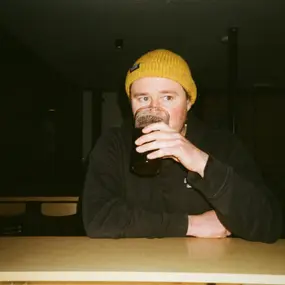
Head Brewer & Co-owner
Head Brewer and Co-founder of Bluntrock Brewery in Rock, North Cornwall. I'm originally from Burton upon Trent, where I grew up surrounded by the brewing industry. My parents even met each other while working at Allied Breweries.
When I was 18, I moved to Cornwall to start my brewing career at Sharps Brewery in Rock. Then, after 2 years of brewing mostly Doombar, I moved across the Camel Estuary to Padstow Brewing Co, where I spent 5 years. During that time, we launched into cans and started producing limited-release beers with Falmouth University art students.
Then in 2020, I was finally able to open my own brewery in the parish of St Minver, alongside my business partner Hugo Roads. After finding an empty plot of land on the industrial estate opposite Sharps Brewery, we dropped off 4 x 40-ft yellow shipping containers and set up a 150-litre brewery and taproom. Then in 2023, we opened a brand new brewery 300 meters away on the road to Polzeath, where we now produce all our beers.